
Aristolochia anguicida
Aristolochia anguicida
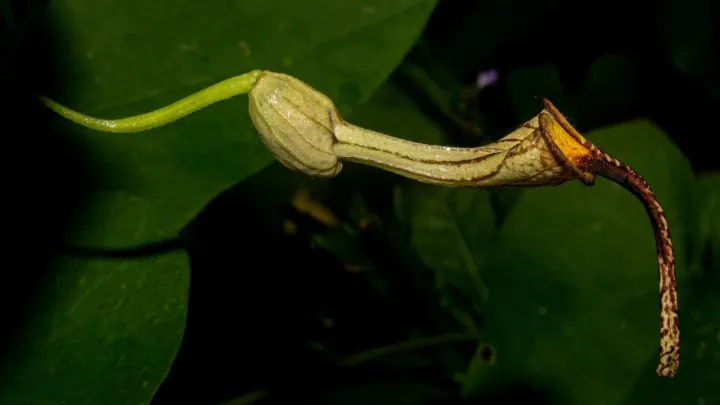
Description
Sowing dates
Aristolochia anguicida is a perennial climbing vine belonging to the Aristolochiaceae family. It is native to tropical regions and thrives in climates where temperatures remain consistently warm throughout the year.
Seeds of the plant should be sown in a well-draining, nutrient-rich potting medium. Germination is best achieved under warm, humid conditions, simulating its natural tropical environment.
The planting depth for seeds should be shallow to ensure that the emergence of the seedling is not hindered by heavy soil layers. Proper spacing is essential to allow for significant vine growth.
Propagation can also be attempted via cuttings during the peak of the growing season, using rooting hormones to increase the success rate of shoot development.
Initial growth requires protection from direct wind and heavy rain, which can damage the delicate stems of the emerging vines before they reach their climbing stage.
Growing requirements
The plant requires high levels of humidity and warm temperatures, typically found in tropical and subtropical zones. It is highly susceptible to frost, which makes outdoor cultivation in temperate regions impossible without greenhouse protection.
Soil quality must be high, consisting of a mix of organic compost and sand to provide excellent drainage while maintaining adequate moisture for the roots.
As a vine, Aristolochia anguicida needs sturdy supports like trellises or fences. Without structural support, the plant will sprawl, which can lead to increased pest pressure and fungal issues.
Lighting should be bright but filtered. Prolonged exposure to intense, direct afternoon sunlight can cause scorching of the leaves and premature drying of the vine.
Regular monitoring of irrigation is crucial. While the plant likes moisture, it cannot tolerate waterlogging, which often leads to root rot and eventual death of the specimen.
Main diseases and pests
Common pests include aphids and spider mites, which are particularly active in warm, dry conditions. These insects target the tender growth at the tips of the vines.
Fungal pathogens such as powdery mildew may appear if the air circulation around the plant is restricted. Improving ventilation and spacing is the primary preventative measure.
Root rot, caused by various soil-borne pathogens, is a significant threat that usually stems from overwatering or poorly draining soil structure.
Effective management involves the use of environmentally friendly insecticidal soaps for pest control and strict adherence to moisture control protocols.
Monitoring for any signs of leaf discoloration or wilting is vital, as these are often the first indicators of an underlying health problem or nutritional deficiency.