
Blume's wild ginger
Asarum blumei
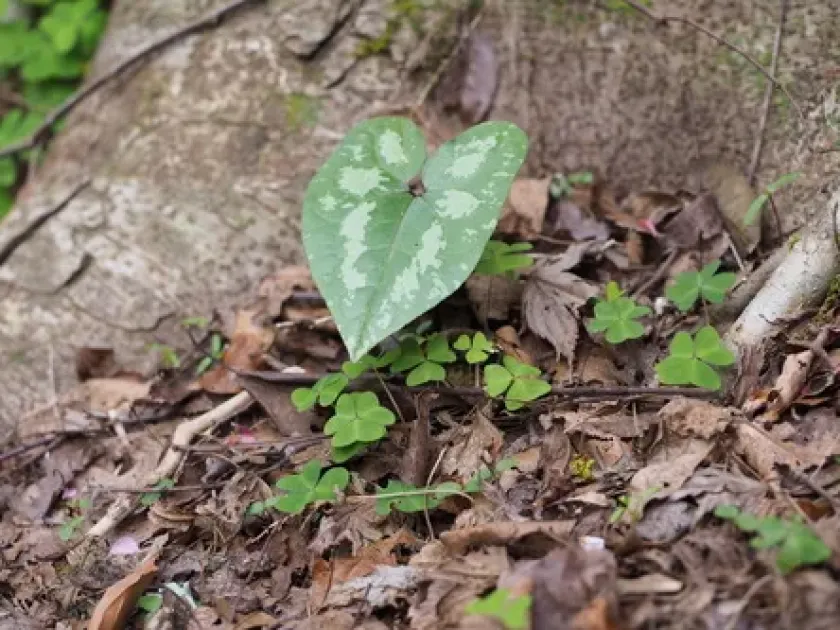
Description
Sowing dates
Blume's wild ginger (Asarum blumei) is a perennial herbaceous plant belonging to the Aristolochiaceae family. In agricultural and horticultural contexts, propagation is primarily achieved through vegetative methods, specifically the division of rhizomes during spring or autumn.
Propagation by seeds is employed less frequently due to the prolonged stratification period required for germination. It is recommended to sow seeds in loose, nutrient-rich substrate immediately after harvesting before winter to allow for natural dormancy requirements.
The optimal periods for dividing and transplanting are early spring, before the onset of active sap flow, or the second half of September, as summer heat subsides. This timing ensures proper root establishment before extreme temperature fluctuations.
When planting, it is necessary to maintain a spacing of approximately 20–30 cm between plants, as the wild ginger forms dense ground-covering colonies. With correct planting techniques, the crop spreads rapidly to form a uniform decorative carpet.
For successful root establishment, it is essential to ensure constant moderate contact between the rhizomes and moist soil. During transplantation, deep burial of the root crown should be avoided; it is optimal to keep it level with the soil surface.
Growing requirements
Blume's wild ginger originates from the East Asian regions, including parts of Japan and China, where it thrives in shaded forest environments. Consequently, the plant has strict requirements regarding light exposure and moisture levels.
The crop prefers semi-shaded or fully shaded locations with protection from direct sunlight. Intense light causes leaf burn and inhibits growth, making areas under tree canopies ideal for its development.
The soil should be rich in organic matter, loose, and possess high water-holding capacity. Asarum is sensitive to waterlogging; therefore, incorporating a high-quality drainage layer in the growing medium is a critical factor.
Soil pH should remain neutral or slightly acidic. In industrial or decorative cultivation, regular application of leaf mold is recommended to maintain soil structure and nutrient levels for optimal crop vigor.
Climatic requirements include the need for protection against desiccating winds and severe winter gales. The plant exhibits good cold hardiness, but during snowless winters with extreme frosts, mulching the planting area with organic material is advised.
Yield
The primary agricultural use of Blume's wild ginger lies in the pharmaceutical industry and landscape design. The yield of green biomass depends directly on the quality of maintenance and the degree of shade provided in the production area.
For medicinal purposes, both the aerial parts of the plant and the rhizomes are harvested. The maximum concentration of biologically active compounds is typically observed during the flowering period, so harvests are timed according to phenological stages.
When cultivated as a groundcover, yield is evaluated by the rate of coverage closure. Under favorable conditions, a single mother plant can cover up to 0.5 square meters within one growing season.
To improve commercial output, drip irrigation and periodic fertilization with humic acids are used. This practice promotes maximum leaf development and shoot density throughout the season.
The average yield of dried medicinal raw material varies depending on planting density. Industrial plantations require annual monitoring to maintain optimal plant population density for sustainable production.
Main diseases and pests
The primary threat to Blume's wild ginger in high-humidity conditions is fungal infection, particularly various forms of root rot. Disease development is often provoked by water stagnation and inadequate air circulation.
Pests such as slugs and snails pose a serious threat to young foliage, especially during the spring. Their infestation can lead to a complete loss of decorative appeal and a decline in plant vigor.
If moisture management is compromised, powdery mildew may occur, manifesting as a white coating on the leaves. Management involves removing affected plant tissues and applying systemic fungicides as a corrective measure.
Nematodes can infest the root system, resulting in stunted growth and leaf chlorosis. Prevention includes soil disinfection before planting and the use of certified healthy planting material.
To protect against pests, the use of sharp-edged mulching materials (e.g., gravel) or the installation of physical barrier traps is recommended. Regular weeding helps reduce the niches available for pest reproduction.
Harvesting
Harvesting medicinal raw materials of Blume's wild ginger is performed manually. The leafy mass is cut with sharp tools, taking care not to damage the root system if long-term perennial growth is intended.
Rhizomes are harvested in the autumn, as metabolic processes slow down, ensuring the highest concentration of active compounds. Harvested material is cleaned of soil, washed in running water, and subjected to drying.
Drying is performed in specialized drying chambers at temperatures not exceeding 40–45 degrees Celsius. This ensures the preservation of essential oils and other thermolabile compounds present in the plant tissue.
After drying, the material is sorted to remove damaged parts and impurities. Properly dried raw material possesses a distinct aroma and retains the characteristic coloration of the leaves and roots.
Storage of the finished product should be in dry, well-ventilated areas, utilizing paper or cloth bags. The shelf life of the product depends on isolation from moisture and direct sunlight.