
Aristolochia sempervirens
Aristolochia sempervirens
Description
Sowing dates
Sowing Aristolochia sempervirens seeds is most effective when done in the autumn, as the seeds require a period of cold stratification to germinate properly.
For indoor propagation, seeds should be sown in late winter after they have undergone a chilling period, ensuring the substrate remains consistently moist but not waterlogged.
Vegetative propagation via cuttings is a popular method; semi-hardwood cuttings taken during the early summer months show the highest rate of rooting success.
Proper spacing is crucial when planting young vines, as this species demonstrates vigorous growth and requires adequate air circulation to prevent foliage density issues.
Young plants should be protected during their first winter, especially in cooler climates, to ensure the root system is well-established and resilient against low temperatures.
Growing requirements
Aristolochia sempervirens is a member of the Aristolochiaceae family and is native to the Mediterranean region, favoring temperate environmental conditions.
The plant thrives in fertile, well-draining soils and is particularly sensitive to waterlogging, which can cause root rot in poorly prepared garden beds.
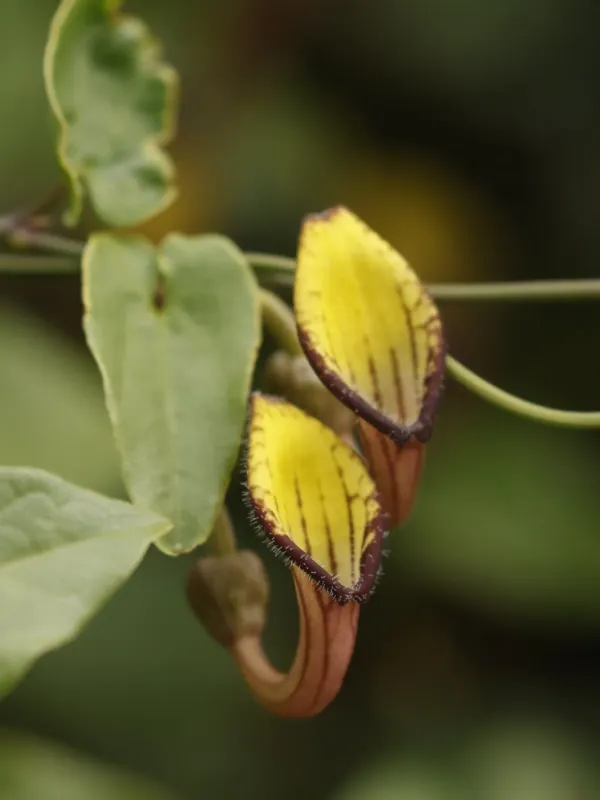
As a climbing vine, it requires sturdy support structures such as trellises, fences, or pergolas to showcase its unique, evergreen foliage and pipe-shaped flowers.
It prefers light shade to full sun, though in extremely hot climates, some protection from intense afternoon sun is recommended to keep the leaves vibrant.
Regular mulching of the base helps maintain soil moisture levels and protects the roots during temperature fluctuations throughout the growing season.
Main diseases and pests
Aphids are the most common pest observed on Aristolochia sempervirens, typically targeting the succulent tips of the new growth during the spring.
Spider mites can become a nuisance during hot, dry spells, causing the leaves to lose their luster and develop characteristic yellow spotting patterns.
Fungal diseases related to excessive humidity are possible, so maintaining proper plant hygiene and pruning away dead material is essential for health.
Routine inspections of the underside of the leaves are recommended to catch infestations early before they become difficult to manage with simple remedies.
If chemical interventions are necessary, always select products that are safe for the surrounding environment and beneficial pollinators visiting the site.