
Birthwort
Aristolochia lingua
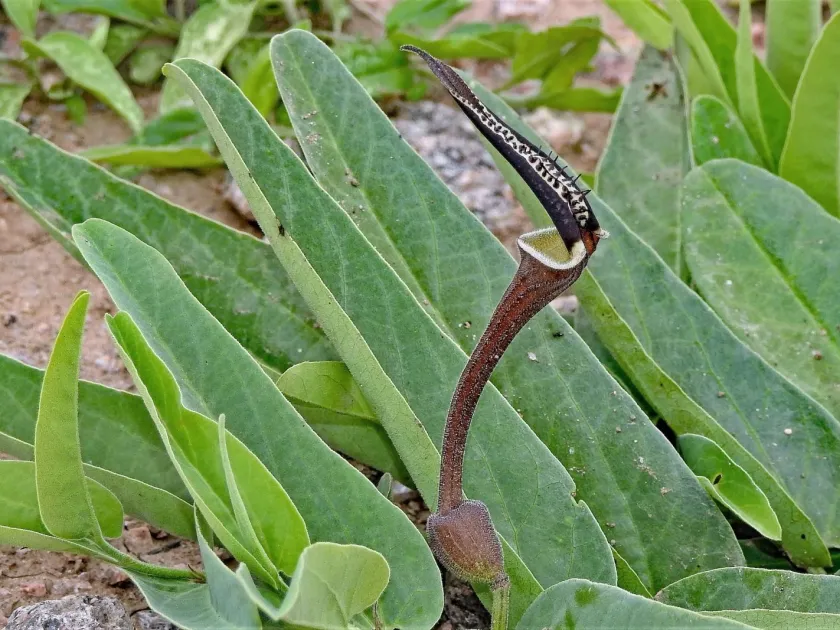
Description
Sowing dates
The propagation of Birthwort typically begins with sowing seeds in the autumn, as they require a period of cold stratification to break dormancy.
For spring planting, seeds should be stratified in a refrigerator at approximately +5°C for about eight weeks to ensure uniform germination rates.
Select a site with well-drained, fertile soil, ensuring the area receives adequate sunlight, although the plant tolerates partial shade conditions well.
Seeds are sown at a shallow depth of 1 to 2 centimeters and must be kept consistently moist until the seedlings are firmly established in the soil.
Vegetative propagation through the division of rhizomes is often preferred for rapid establishment, ideally performed during the dormant season.
Growing requirements
Birthwort, a member of the Aristolochiaceae family, is a herbaceous perennial characterized by its distinct cordate leaves and climbing or erect stems.
The plant thrives in nutrient-rich, loamy soils that maintain moisture without becoming waterlogged, as it is sensitive to stagnant root conditions.
Climatic requirements are modest, as the species is well-adapted to temperate climates and demonstrates excellent winter hardiness across diverse regions.
Regular maintenance involves keeping the soil aerated and providing organic amendments to support the aggressive growth of its underground rhizome network.
Spacing is essential, as the plant spreads through rhizomes and can dominate the area if not managed properly within the agricultural layout.
Main diseases and pests
Birthwort is naturally resilient to many common plant diseases due to the presence of aristolochic acids, which provide significant chemical defenses.
The most common pests affecting young growth include mollusks such as slugs and snails, which can cause significant damage in damp environments.
Overwatering leading to poor soil drainage is the primary risk factor for root-related issues, which can impede the health of the entire plant colony.
In seasons with high humidity, fungal spots on leaves may occur, requiring the removal of infected foliage to prevent the spread of the pathogen.
Effective weed control is particularly vital during the plant's first season, as seedlings grow slowly and struggle to compete with aggressive weeds.
Harvesting
The aerial parts of Birthwort are harvested during the flowering period, which usually spans from late spring to the early weeks of summer.
Harvesting should be done using sharp tools to cut stems approximately 10 to 15 centimeters above the soil to allow for healthy regrowth.
Drying must be conducted in a cool, shaded, and well-ventilated area to ensure that the delicate chemical compounds are not degraded by high temperatures.
Seeds are collected in late summer once the seed capsules have fully matured, indicated by a deep brown color and natural splitting of the pods.
Given the toxic nature of the plant, all handled material must be stored in secure containers and clearly labeled to avoid accidental consumption.