
Brazilian Dutchman's pipe
Aristolochia brasiliensis
Description
Growing requirements
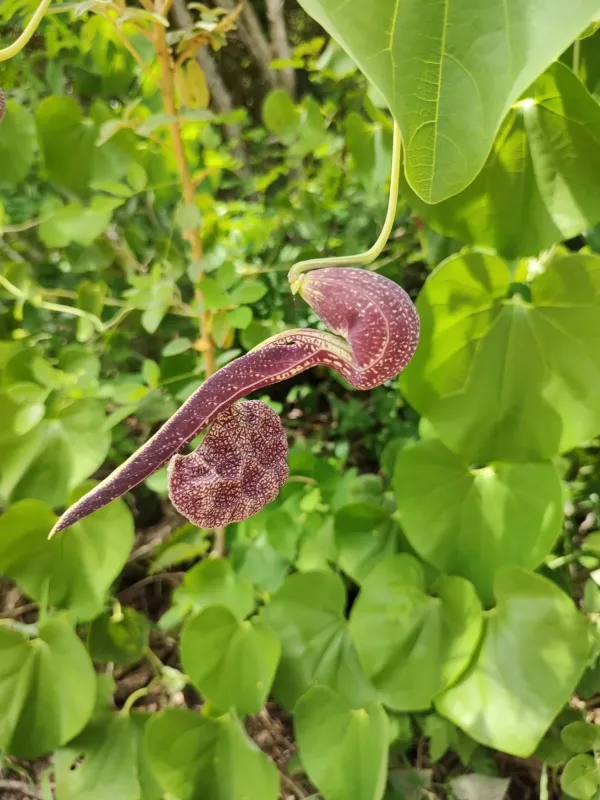
The Brazilian Dutchman's pipe (Aristolochia brasiliensis) is a member of the Aristolochiaceae family. It is a robust climbing vine known for its exotic, pipe-shaped flowers that possess a unique mechanism for attracting pollinators.
Native to the tropical forests of Brazil, this plant requires warm conditions to thrive. In temperate regions, it is primarily used in greenhouse cultivation or as a seasonal ornamental in large containers placed in sheltered areas.
Optimal growth requires rich, well-draining soil with a pH level ranging from slightly acidic to neutral. High organic matter content significantly improves the development of the root system and overall vigor of the vine.
The plant performs best when provided with partial shade or filtered light. While it loves warmth, exposure to harsh, direct sunlight can lead to leaf scorching and rapid water loss through the large, broad foliage.
Consistent moisture is essential during the growing season. The plant should be watered thoroughly as soon as the top layer of soil becomes dry to the touch, ensuring the soil never completely dries out or remains waterlogged.
Main diseases and pests
Spider mites are the most frequent pests during the indoor growing phase. These pests thrive in low-humidity environments and can quickly infest the underside of the leaves if left uncontrolled.
Root rot represents a critical threat to the long-term health of the plant. It is usually caused by heavy, poorly draining substrates that prevent oxygen from reaching the roots, leading to physiological decline.
Mealybugs can often colonize the stem nodes and junctions. Regular monitoring and physical removal, or the application of horticultural oils, are effective methods for managing low-level infestations.
Fungal leaf spots may occur if air circulation is inadequate. Proper spacing and airflow help maintain a healthy microclimate around the foliage, significantly reducing the risk of pathogen spread.
As a precaution, handlers should always wear protective gloves. The plant contains aristolochic acid, which is toxic if ingested and can cause skin irritation upon contact with the plant's sap.