
Japanese Aralia
Fatsia japonica (Thunb.) Decne. & Planch.
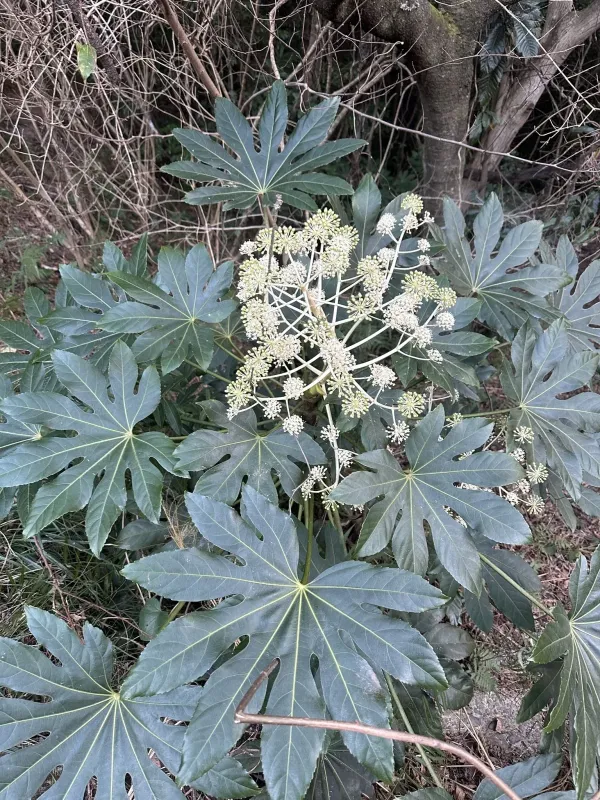
Description
Growing requirements
Fatsia japonica is an evergreen shrub belonging to the Araliaceae family. Known for its large, palmate leaves and glossy appearance, it is a staple of tropical-style gardening and interior landscaping, capable of reaching significant sizes under favorable conditions.
Originally native to Japan, South Korea, and Taiwan, this plant is well-adapted to temperate and subtropical moist forests. It is highly valued in horticulture for its shade tolerance and ability to thrive in environments where other foliage plants might struggle.
The cultivation requirements focus on a well-draining, nutrient-rich soil mix. A combination of peat, loam, and coarse sand provides the necessary aeration for root health while retaining enough moisture for consistent development throughout the active growing season.
Climatic requirements are specific: the plant prefers moderate temperatures during the day and cooler periods at night. It is not frost-tolerant, meaning in colder regions, it must be protected in climate-controlled greenhouses or interior spaces during winter months.
In terms of economic use, it is a key ornamental crop for commercial greenhouse nurseries. Its air-purifying properties and aesthetic value make it a popular choice for corporate office interiors and large-scale botanical display projects globally.
Main diseases and pests
Common pests affecting Fatsia japonica include spider mites and scale insects, which often thrive in environments with low humidity. Regular misting and monitoring are essential to prevent these pests from causing significant damage to the leaf tissue.
Fungal diseases, such as root rot, are typically the result of overwatering or poor drainage systems. When the substrate remains saturated for too long, oxygen deficiency in the root zone leads to rapid decay and systemic plant failure.
To maintain plant health, it is critical to ensure proper spacing and airflow. This reduces the risk of fungal spores settling on the foliage and helps keep the plant robust against potential infections during periods of high humidity.
Nutrient deficiencies, particularly yellowing leaves, indicate an imbalance in the substrate's mineral content. Applying a balanced NPK fertilizer during the spring and summer encourages vigorous growth and increases natural resistance to environmental stressors.
Effective management strategies combine early detection of pests with strict irrigation control. By prioritizing a sterile growing environment and balanced fertilization, growers can minimize threats and maintain the ornamental quality of the shrub.