
Zantedeschia
Zantedeschia
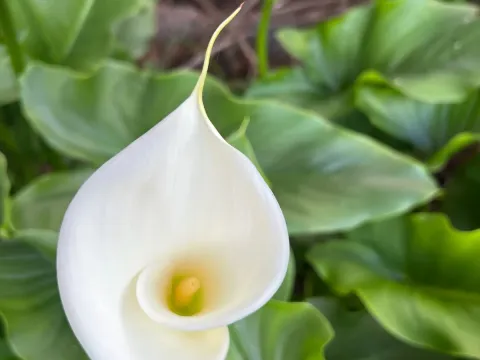
Zantedeschia, commonly known as the Calla lily, is a genus of herbaceous perennial plants belonging to the Araceae family. Originating from Southern Africa, these plants naturally thrive in damp, subtropical habitats and seasonal wetlands.
What the section contains


Zantedeschia
Planting tubers into open soil or greenhouse beds is performed in the spring once the soil temperature consistently reaches 15 degrees Celsius. For early flowering cycles, growers often start tubers in pots in late winter before transplanting to permanent locations.
The optimal planting depth ranges from 5 to 10 cm, depending on the tuber diameter. Growers must maintain a spacing of 30–40 cm between plants to ensure proper aeration, which is vital to preventing excess humidity and fungal development.
The growing season typically spans 3 to 5 months. Following the senescence of foliage, the tubers are lifted for a dormancy period of at least 2–3 months at 10–15 degrees Celsius, which is necessary to induce flower bud differentiation for the next cycle.
The crop requires a loose, well-draining substrate rich in organic matter with a neutral to slightly acidic pH. In professional greenhouse cultivation, peat-based mixes amended with perlite are preferred to ensure optimal root zone oxygenation.
This crop is highly sensitive to irrigation regimes. During the active growth phase, the soil must be kept consistently moist; however, waterlogging is strictly prohibited as it triggers tuber rot and bacterial decay within days.
Light management is a critical factor for success. Zantedeschia performs best in bright, diffused light. Intense midday sun can cause leaf scorch, necessitating the use of professional shading screens in greenhouse environments.
Optimal temperature management for the vegetative phase is between 18 and 24 degrees Celsius. Temperatures exceeding 25 degrees negatively affect the quality of the spathe and may lead to premature flower senescence.
Balanced nutrition is essential for yield. Nitrogen is prioritized early in the season to support canopy growth, while phosphorus and potassium levels are increased during the budding phase to ensure robust, high-quality flower stems.
Ambient humidity should be maintained between 70 and 80 percent. Low humidity levels often result in necrotic leaf margins and create favorable conditions for spider mite infestations, necessitating careful climatic control.
Bacterial soft rot (Pectobacterium) is the primary threat to Zantedeschia, characterized by the softening of tuber tissue and a foul odor. This is often exacerbated by high temperatures and poor drainage conditions in the root zone.
Fungal pathogens such as Phytophthora and Rhizoctonia pose significant risks to root health. Proactive management includes the application of systemic fungicides as a seed treatment before planting to minimize infection risks.
Thrips and aphids are the most common insect pests, causing damage to the spathes, which renders the flowers commercially unviable. Regular integrated pest management (IPM) practices are required to monitor and control insect populations.
Spider mites thrive in dry conditions. Prevention involves maintaining high relative humidity and applying acaricides immediately upon detection of the first signs of leaf stippling or webbing.
Viral diseases, such as Tomato Spotted Wilt Virus (TSWV), manifest through leaf distortion and chlorotic mottling. Since there is no cure for viral infections, rigorous sanitation and vector control are the only effective management strategies.
Harvesting is performed when the spathe has unfurled to approximately two-thirds of its potential size. Cutting should be done early in the morning when turgor pressure is at its peak to maximize the post-harvest shelf life of the flowers.
Technically, the stems should be pulled from the leaf base rather than cut with a knife. This minimizes the risk of pathogens entering the plant tissue through open wounds, which could otherwise lead to stem decay.
Harvested stems must be placed immediately in clean water or a floral preservative solution. Logistics require transport in a vertical position at low temperatures to prevent the stems from bending and to maintain quality.
For short-term storage in cold chambers, a temperature of 5 degrees Celsius is ideal. Growers must ensure that no surface moisture accumulates on the spathes during storage to prevent the development of physiological spots.
Grading is based on stem length, spathe size, and overall color intensity. High-quality flowers must be free from mechanical damage, pest marks, and soil particles to meet strict market standards.