
Zantedeschia rehmannii
Zantedeschia rehmannii
Description
Sowing dates
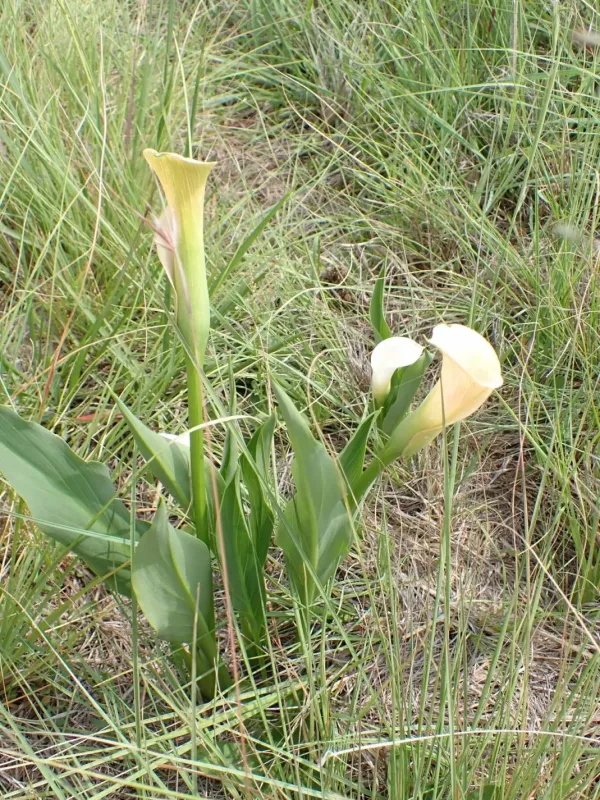
Zantedeschia rehmannii, commonly known as the pink calla lily, is a perennial bulbous plant belonging to the Araceae family, originating from South Africa. It is highly valued for its elegant funnel-shaped spathes and sword-shaped leaves.
Planting of the tubers should occur in spring after all danger of frost has passed and the soil has warmed sufficiently, typically when temperatures are consistently above 15 degrees Celsius.
Tubers are placed at a depth of about 5 to 8 centimeters, with adequate spacing of 30 to 40 centimeters apart. Proper spacing is crucial to prevent foliage crowding and to ensure good air circulation around each plant.
For an earlier blooming period, gardeners often start the tubers indoors in pots 4 to 6 weeks before the final frost date, keeping them in a warm, well-lit environment with moderate moisture levels.
At the end of the season, as temperatures drop, the tubers must be lifted from the ground and stored in a cool, frost-free location to survive the winter, as they are not hardy in freezing climates.
Growing requirements
This species thrives in bright, indirect light. Direct sunlight, especially during the peak afternoon hours, should be avoided to prevent scorched leaves and faded color on the spathes.
A fertile, well-draining, slightly acidic soil is essential. Poorly drained soil is the most common cause of failure, as it leads to the rotting of the fleshy tubers and roots.
Zantedeschia rehmannii prefers a consistent temperature range of 20 to 25 degrees Celsius. It requires high humidity levels to maintain vibrant foliage and healthy flower development.
Watering should be regular during the active growing season, keeping the soil consistently moist but never waterlogged. As the plant approaches its dormant period, watering should be gradually decreased.
Balanced fertilizers with a focus on phosphorus and potassium, rather than nitrogen, are recommended during the peak of growth to support strong spathe production without excessive soft tissue growth.
Main diseases and pests
Bacterial soft rot is the primary threat to the tubers, often triggered by overwatering, low temperatures, and poor drainage, causing the plant to collapse rapidly.
Fungal infections, including Botrytis or gray mold, can affect the foliage and stems in environments characterized by poor air movement and excessively high humidity.
Pests such as spider mites and thrips are common in dry, indoor conditions. They feed on the sap of the leaves, causing mottling, deformation, and an overall decline in plant health.
Aphids can also colonize the plant, particularly on new growth and developing flower buds, which may lead to the transmission of various viral pathogens.
Effective management involves consistent cultural practices, such as sanitizing garden tools, ensuring proper drainage, and inspecting new plantings for signs of infestation or decay.
Harvesting
The harvest of tubers is performed in autumn once the foliage has naturally yellowed and begun to die back, signaling that the plant has entered its dormant phase.
After lifting, the tubers should be gently cleaned of soil and debris, then cured in a well-ventilated, shaded area for about two weeks to allow the skin to toughen.
It is advisable to inspect the tubers for any signs of damage or decay and to apply a fungicide treatment to protect them throughout the long storage period.
The cured tubers should be stored in a dry, cool location, packed in materials like dry peat moss or vermiculite, and maintained at a temperature around 10 to 12 degrees Celsius.
Regular monitoring during storage is essential to remove any tubers showing signs of rot, thereby preventing the spread of pathogens and ensuring a high-quality crop for the next spring season.