
Taro
Colocasia esculenta (L.) Schott
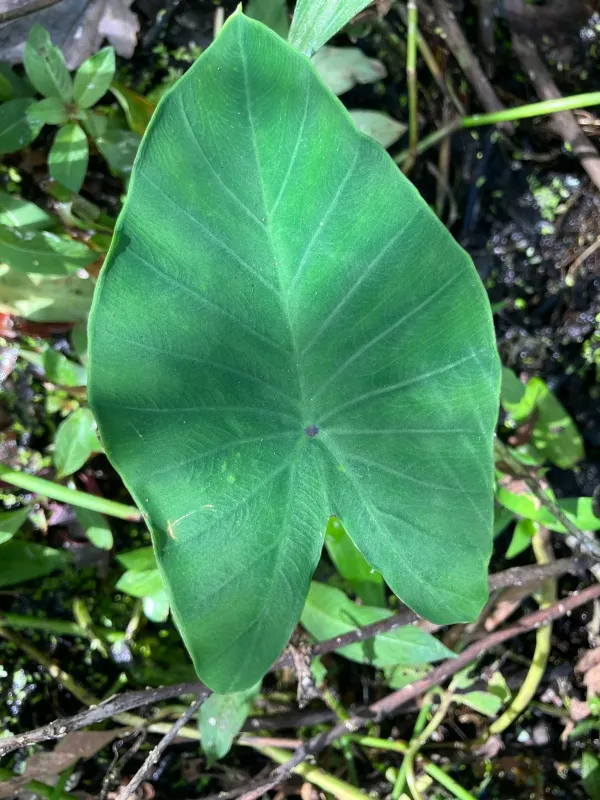
Description
Sowing dates
Taro (Colocasia esculenta) is a tropical root crop that requires warm temperatures for successful germination and growth. Planting should occur only after the soil has warmed up to at least 15–18°C, ensuring there is no further risk of frost in the growing region.
The crop is propagated vegetatively using cormels (side shoots) or pieces of the main corm. It is essential to select healthy, disease-free planting material to ensure vigorous growth and a high-quality yield during the long growing season.
The standard planting density involves spacing rows 60–90 cm apart, with individual plants placed 40–50 cm apart. This spacing is critical to allow for the development of large leaves and the formation of substantial underground storage organs.
In large-scale operations, soil preparation is vital. The field should be deeply tilled and cleared of perennial weeds, as taro is quite sensitive to weed competition, especially during the first few months of development.
Corms are usually planted at a depth of 5–10 cm. In tropical climates, planting can be staggered throughout the year, but in subtropics, it is strictly tied to the spring planting window to maximize the period of active growth before temperatures drop.
Growing requirements
Taro belongs to the Araceae family and is a perennial herb. The crop has high water requirements, as it thrives in moist, swampy, or well-irrigated soils. It is often grown in fields that can be flooded for part of the growing cycle.
The plant grows best in temperatures between 25°C and 30°C. Growth slows significantly below 10°C, and frost will kill the above-ground foliage. Providing wind protection can also help in regions where desiccating winds are common.
Rich, deep, alluvial soils are ideal for taro cultivation. The preferred pH range is between 5.5 and 7.0. Soils with good water-holding capacity are essential, as the plant cannot tolerate long periods of drought.
Light exposure is another key factor. While taro can tolerate partial shade, maximum corm yield is achieved in full sunlight. Insufficient light results in smaller corm development and lower starch accumulation.
Regular and abundant irrigation is the cornerstone of taro farming. If rainfall is insufficient, supplemental irrigation is mandatory. Drip or overhead systems are commonly used to maintain consistent soil moisture levels throughout the development phase.
Yield
The yield of taro varies significantly depending on the cultivar and management practices, typically ranging from 10 to 25 metric tons per hectare. Intensive management, including adequate fertilization and water control, can push yields even higher.
The growing season for taro lasts between 6 to 12 months, during which the plant accumulates starch and nutrients in its corms. Careful monitoring of foliage health is necessary to ensure that the plant maximizes energy storage.
Fertilization should prioritize potassium, which is essential for corm enlargement and overall quality. Nitrogen applications are useful in the early vegetative stage but should be managed carefully toward maturity to avoid excessive leaf growth.
Cultivation practices like hilling or ridging help improve soil aeration and weed control. Keeping the field clean of competition allows the plant to allocate its full metabolic resources to the underground corms.
Beyond human consumption, taro is an important industrial crop used to produce starch and flour. Its versatility makes it a staple food source for millions, with both the corms and young leaves used in various culinary applications.
Main diseases and pests
Phytophthora leaf blight is the most serious disease affecting taro, causing rapid leaf decay and potential crop failure in high-humidity conditions. Using blight-resistant varieties is the primary method of disease management.
Root rots caused by various fungi can severely damage the plant, especially in poorly drained soils. Improving field drainage is the best way to prevent these pathogens from colonizing the root system.
Spider mites and aphids are common pests that feed on the underside of taro leaves. These pests cause chlorosis and stunted growth, and they can act as vectors for viruses, which are difficult to eradicate once a field is infected.
Root-knot nematodes can cause significant damage to the corms, leading to deformities and lower market value. Preventive measures, including strict crop rotation and using nematode-free stock, are essential for sustainable cultivation.
Regular scouting of the field is necessary for early detection of pest and disease outbreaks. If damage is localized, removing the affected plants can prevent the spread of the pathogen to the rest of the crop.
Harvesting
Harvesting usually begins when the leaves start to turn yellow and decline, signaling that the plant has stopped accumulating energy. Leaving the corms in the ground after this point can lead to quality loss or rot.
Mechanical harvesters are often used to lift the corms, though manual harvesting is common for small-scale operations. Careful handling is required during the extraction process to avoid bruising, as injured corms are highly susceptible to storage diseases.
Post-harvest, the corms are cleaned of soil and debris. If they are to be stored for a long time, they must be cured in a well-ventilated, dry area to allow skin healing and moisture reduction.
For long-term storage, taro requires temperatures between 10°C and 15°C with moderate humidity. Storage bins or well-ventilated crates are ideal for preventing moisture buildup and fungal growth.
Properly cured taro corms can be stored for several months if kept under optimal conditions. Regular inspection of the stored harvest is recommended to identify and remove any rotting corms before they affect the rest of the pile.