
Opopanax hispidus
Opopanax hispidus
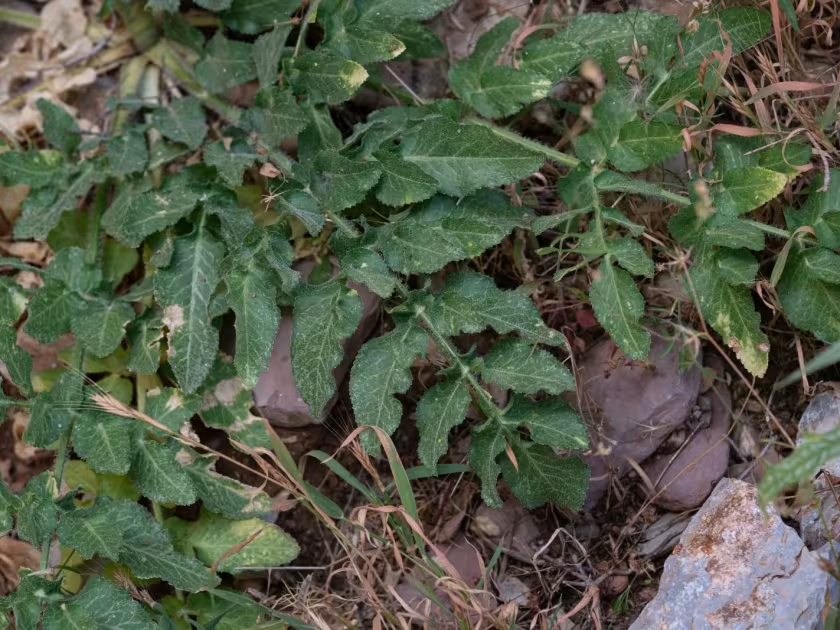
Description
Sowing dates
Opopanax hispidus is a perennial herb belonging to the Apiaceae family. Successful propagation of this crop typically requires cold stratification, making late autumn the ideal time for sowing seeds directly into prepared soil to ensure proper germination during the following spring.
When opting for spring sowing, seeds must be pre-treated by soaking and maintaining them at low temperatures (around 2–5 degrees Celsius) for several weeks. This method significantly increases the germination energy and ensures a more uniform emergence of seedlings across the field.
Seeds should be planted at a depth of 1.5 to 2 centimeters. Because the crop develops a substantial leaf rosette, maintaining a spacing of at least 45–60 centimeters between rows is essential to prevent overcrowding and to facilitate maintenance activities.
Field preparation must focus on eliminating perennial weeds, as the young plant is slow to establish and can easily be outcompeted during its first year of growth. Using high-quality, certified seeds is crucial for establishing a healthy and productive plantation.
Seedlings usually emerge within 3–4 weeks under optimal moisture conditions. Careful monitoring of the topsoil is necessary during this period to ensure the substrate does not dry out, which would otherwise lead to failure in plant establishment.
Growing requirements
This crop thrives in well-lit areas with fertile, well-drained soils. Opopanax hispidus is sensitive to waterlogging, as standing water can lead to root rot; therefore, selecting sites with natural slopes or incorporating drainage systems is highly recommended.
The ideal soil type is a rich loam with a neutral to slightly alkaline pH. If the soil is too heavy, farmers should improve its structure by adding organic matter, such as well-decomposed compost or river sand, to enhance aeration and root penetration.
While the plant exhibits moderate winter hardiness, extreme, snowless winters can damage the root crown. Applying organic mulch during late autumn can protect the root system from freezing and help maintain a more stable soil temperature throughout the colder months.
During the active vegetation phase, regular but moderate irrigation is required. Despite its taproot system, which helps the plant withstand temporary drought, consistent moisture levels contribute to better growth rates and higher yields of essential oils.
Nutrient management involves applying balanced fertilizers during early spring. Nitrogen applications should be managed carefully, as excessive growth might lead to a dilution of the aromatic compounds that define the plant's economic value.
Yield
The primary economic value of Opopanax hispidus lies in the collection of its fragrant gum and essential oils. Plantation productivity peaks as plants reach 3–4 years of age, at which point the concentration of bioactive compounds is at its highest.
Total yield depends heavily on site conditions and the precision of the cultivation techniques used. Hot, sunny summers generally result in higher concentrations of volatile oils in both the foliage and the stems of the plant.
Harvesting techniques vary depending on the target product. Resin collection requires precise manual incisions on the roots or lower stems, a labor-intensive process that determines the final quality and purity of the resulting essential oils.
The annual yield of dried herbal biomass is substantial under proper management, making this a viable option for industrial-scale aromatic plant production. However, returns are heavily reliant on maintaining a consistent plant density per hectare.
Breeders recommend using selected genotypes with proven high concentrations of secondary metabolites to maximize economic returns. Regular evaluation of the plantation's health is necessary to ensure consistent performance over multiple years.
Main diseases and pests
Opopanax hispidus is susceptible to common pests affecting the Apiaceae family, most notably carrot flies and aphids. These insects can cause significant damage to the roots and tender shoots, leading to stunted growth or total plant loss.
Fungal diseases, including powdery mildew and gray mold, represent the most frequent sanitary threats. These conditions are typically exacerbated by high humidity and poor air circulation within the plantation, necessitating strict adherence to spacing and weed control.
Strategic crop rotation is the most effective preventative measure against soil-borne pathogens. Experts advise against returning the crop to the same plot for at least 4–5 years to minimize the buildup of host-specific diseases.
Integrated pest management, including the use of targeted biological controls, is increasingly favored in commercial cultivation. This approach ensures high-quality output while adhering to environmental safety standards for herbal medicine ingredients.
Early identification of pest populations is crucial. Farmers should conduct routine field inspections to detect signs of infestation immediately, as rapid intervention can prevent localized outbreaks from turning into plantation-wide losses.
Harvesting
The harvesting of the herb for essential oil production occurs during the peak flowering stage. This is a critical timeframe, as the concentration of volatile oils reaches its peak just before the development of seeds begins.
Careful harvesting of the aerial parts is required to maintain the structural integrity of the plant. If the plant is intended for multi-year resin collection, harvesters must ensure the root system remains undamaged during the process.
Post-harvest processing involves drying the plant material in shaded, well-ventilated areas. Direct sunlight must be avoided, as UV exposure causes the rapid degradation of light-sensitive aromatic compounds.
Once dried, the raw material should be stored in airtight containers to preserve the fragrance and chemical composition. Ideally, storage facilities should maintain low humidity and stable temperatures to extend the shelf life of the product.
The final step in the cycle is the removal of crop residues to reduce the risk of disease carryover. This ensures the soil is clean and prepared for future land use, maintaining the overall health and productivity of the agricultural site.