
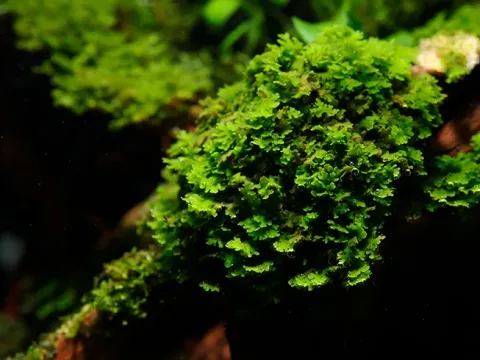
Riccardia
Riccardia
Riccardia is a genus of liverworts belonging to the Aneuraceae family. While not a conventional crop in the food sense, it is a highly valued agricultural product within the specialized sector of aquatic ornamental plant farming.
What the section contains


Riccardia
The genus has a wide global distribution, naturally inhabiting damp tropical forests, temperate riverbanks, and decaying organic substrates. This wide range has allowed for the selection of specific strains suitable for controlled cultivation.
Botanically, Riccardia consists of a flattened, branched thallus without true roots. It grows in compact, deep-green clumps that are structurally resilient once properly anchored to a stable substrate.
The crop requires precise environmental control, typically provided in indoor aquatic farming facilities. Key requirements include a temperature range of 18-26°C, moderate artificial lighting, and a steady supply of carbon dioxide to facilitate photosynthesis.
The propagation method is purely vegetative. Farmers harvest the healthy thallus and secure it to porous materials such as volcanic rock or driftwood, where it expands over time to form dense, marketable mats.
The most significant threat to a Riccardia crop is the infestation of filamentous algae. Since Riccardia is a slow-growing species, it cannot compete with fast-growing algae if nutrient levels in the water column are not strictly managed.
Sediment accumulation is a major physical threat to the crop. Debris trapped within the thallus branches restricts water flow and light penetration, which often leads to necrotic spots and the eventual decay of the plant mass.
Biological pests, particularly certain species of aquarium snails and small crustaceans, can cause significant structural damage to the delicate branches of the liverwort, rendering the crop aesthetically unsuitable for sale.
Nutrient imbalances, particularly high nitrate or phosphate levels, trigger stress responses in Riccardia. This often manifests as color fading, brittleness, or the rapid proliferation of competing pathogens.
Incorrect light spectrum or duration can also lead to morphological issues. Plants grown under suboptimal light intensity often exhibit stunted development and lose the characteristic bushy texture that defines their market value.