
Riccardia latifrons
Riccardia latifrons
Description
Growing requirements
Riccardia latifrons belongs to the family Aneuraceae and is a distinct type of thallose liverwort. Originally found in damp forest habitats across the Northern Hemisphere, it thrives on decaying wood, shaded stream banks, and moisture-retentive soils.
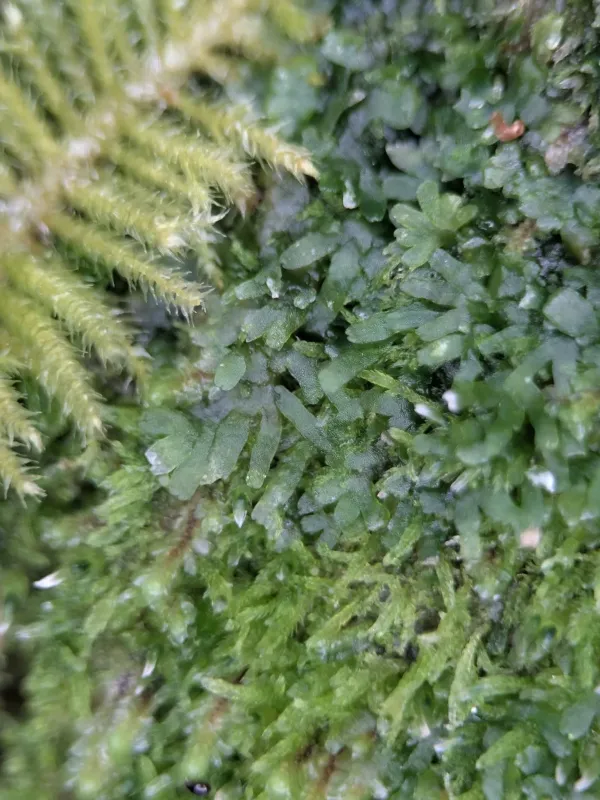
The morphology of the plant is characterized by a flattened, dark-green thallus with regular dichotomous branching. Unlike vascular plants, it lacks a complex root system, relying on rhizoids to anchor itself to the substrate while absorbing nutrients directly from the environment.
To cultivate this species successfully, one must replicate its natural humid environment. It requires high atmospheric humidity and constant, gentle hydration, making it highly suitable for paludariums, vivariums, and controlled aquatic setups.
Temperature management is critical; the plant performs best in a range between 18°C and 24°C. Excessive heat can stress the thallus, leading to a loss of color or fragmentation. A steady, mild light source is preferred to prevent bleaching and encourage compact, healthy growth.
In terms of practical use, Riccardia latifrons has become a staple in the aquarium hobby. Its slow growth rate and delicate texture make it an excellent choice for detailing rock surfaces and driftwood, providing a natural, aged appearance to high-end aquascapes.
Main diseases and pests
The primary concern for growers is the accumulation of debris and the subsequent growth of opportunistic fungi. These can quickly colonize the moss mat, causing necrosis in the dense internal layers of the thallus.
Biological threats also include infestation by small invertebrate pests that feed on moss tissue. Furthermore, chemical imbalances in the water, such as drastic pH shifts or high concentrations of nitrates, can inhibit the plant’s ability to thrive and may lead to colony collapse.