
Riccardia chamaedryfolia
Riccardia chamaedryfolia
Description
Growing requirements
Riccardia chamaedryfolia is a miniature liverwort species belonging to the Aneuraceae family. In its natural habitat, it is found in tropical and subtropical regions of Asia, typically colonizing damp, shaded areas such as riverbanks, forest floors, and wet rock formations where humidity remains consistently high.
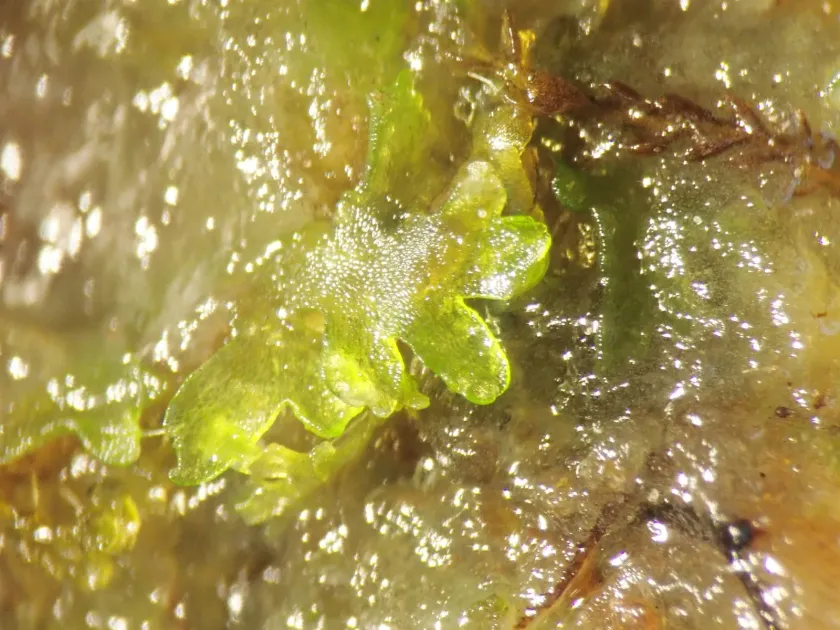
Botanically, this plant is defined by its compact, highly branched thallus which has a deep green coloration. Unlike typical vascular plants, it lacks true roots and instead anchors itself to substrates using specialized structures called rhizoids, which allow it to thrive on hard surfaces like rocks or driftwood.
Environmental requirements for cultivation are specific: the plant demands moderate light levels and high humidity. It is extremely sensitive to intense direct light, which induces the rapid growth of algae, which in turn outcompetes the liverwort for essential nutrients and light exposure.
Soil requirements for Riccardia are minimal, as it is primarily an epiphytic organism. When cultivated, it requires inert, porous substrates that provide stability. Proper water quality is crucial; the plant is highly susceptible to nitrate fluctuations and requires clean, stable aquatic environments.
Temperature control is essential for optimal growth, with an ideal range between 18 and 26 degrees Celsius. Stable conditions prevent the thallus from becoming brittle or necrotic, ensuring that the plant retains its dense, coral-like structure that makes it a prized ornamental species.
Yield
The primary use of Riccardia chamaedryfolia is in the field of aquascaping and specialized horticulture. It is highly valued for its slow growth and intricate branching, making it an excellent candidate for the foreground of high-end aquarium displays and terrariums.
Production efficiency for this crop is measured by the surface area coverage. In nursery settings, it is cultivated in high-humidity greenhouses on specialized inert pads or mats that provide the necessary moisture while allowing for easy harvesting and distribution.
Propagation is exclusively vegetative. Producers divide the healthy thallus into smaller fragments, which are then attached to new substrates. Under controlled conditions, these fragments develop into full-sized colonies, providing a consistent supply for the aquarium retail market.
The market value remains high due to the specialized nature of the plant and the professional skill required to maintain it. Successful yield depends on consistent water chemistry and the prevention of invasive micro-fauna or flora that can compromise the crop's quality.
Quality control in the trade focuses on the density of the colony and the uniformity of the color. A healthy crop should show vigorous growth at the tips and a clean, non-decayed base, signaling optimal health and high commercial grade for landscaping use.
Main diseases and pests
The most significant threat to Riccardia chamaedryfolia is the encroachment of filamentous algae. Given the plant's slow growth rate, algal blooms can quickly smother the liverwort, depriving it of the light and space needed to maintain its structural integrity and vitality.
Fungal infections can occur in greenhouse environments where humidity is maintained without adequate ventilation. Stagnant air combined with moisture creates a breeding ground for pathogens that can lead to the rapid decay of the plant's delicate tissues.
Nutrient deficiency is another common threat, often manifesting as brown discoloration or loss of tissue density. Ensuring that the plant receives appropriate trace elements is key to preventing widespread necrosis and maintaining the health of the entire colony.
Mechanical damage is a persistent risk. Because the plant's structure is fragile, excessive handling or aggressive water currents can cause the thallus to break or detach from its substrate, leading to losses in commercial nursery environments.
Preventative maintenance involves regular tank cleaning to remove accumulated organic waste and strict quarantine protocols when introducing new plants. By managing these variables, growers can minimize threats and maintain a healthy, thriving population of Riccardia.