
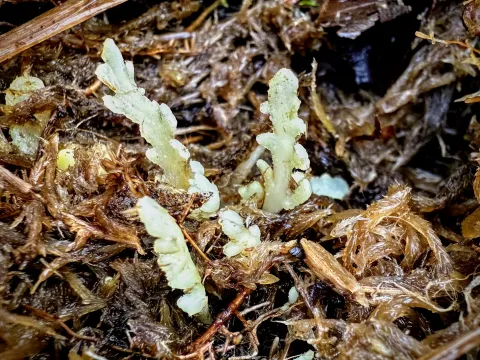
Cryptothallus
Cryptothallus
Cryptothallus is a genus of liverworts in the family Aneuraceae, distinguished by its unique status as a myco-heterotroph. Being devoid of chlorophyll, this plant cannot perform photosynthesis and relies entirely on carbon sourced from fungal partners.
What the section contains

Cryptothallus
In terms of agricultural status, Cryptothallus is not a crop. It grows exclusively in specialized habitats, specifically in close association with fungi of the genus Tulasnella. These fungi act as bridges, transferring nutrients from tree roots to the liverwort.
The geographic range of this plant is restricted to northern and temperate regions of Europe. It prefers moist, shaded forest floors where it develops its white or pale yellow thalli entirely hidden under leaf litter or within the peat layer.
Environmental requirements include constant high humidity and undisturbed soil profiles. The presence of specific mycorrhizal networks is essential for the germination and long-term development of the thallus structure.
Botanically, the plant is a fascinating example of evolutionary adaptation to low-light environments. Its entire life cycle occurs within the soil, reflecting a specialized ecological niche that is highly sensitive to environmental alterations.
The primary threats to Cryptothallus involve habitat degradation, particularly logging and land drainage projects. The drying of the forest floor kills the fungal symbionts, which effectively eliminates the liverwort colony.
Mechanical damage to the topsoil layer during forest management activities poses a direct risk. Because the plant resides beneath the surface, it is impossible to protect during activities that churn the soil or clear the understory.
Environmental pollution can also threaten the delicate balance between the liverwort and its fungal partners. Changes in soil pH or heavy metal accumulation can disrupt the metabolic signals required for their symbiotic relationship.
Competition from other plant species that alter the soil microbiome might negatively impact the availability of necessary fungi. This indirect pressure limits the ability of the liverwort to colonize new forest patches.
There are no known diseases or pests that target this liverwort in a way that would require agricultural management. Conservation of its natural habitat is the only viable method to prevent the decline of this rare species.