
Riccardia incurvata
Riccardia incurvata
Description
Growing requirements
Riccardia incurvata is a species of thalloid liverwort belonging to the Aneuraceae family. This bryophyte is primarily found in temperate zones of the Northern Hemisphere, where it occupies highly specific micro-habitats.
The plant thrives in moist, open environments, typically on sandy or muddy soils that remain consistently damp throughout the year. It is most commonly found in wetlands, near stream banks, or in areas prone to seasonal inundation.
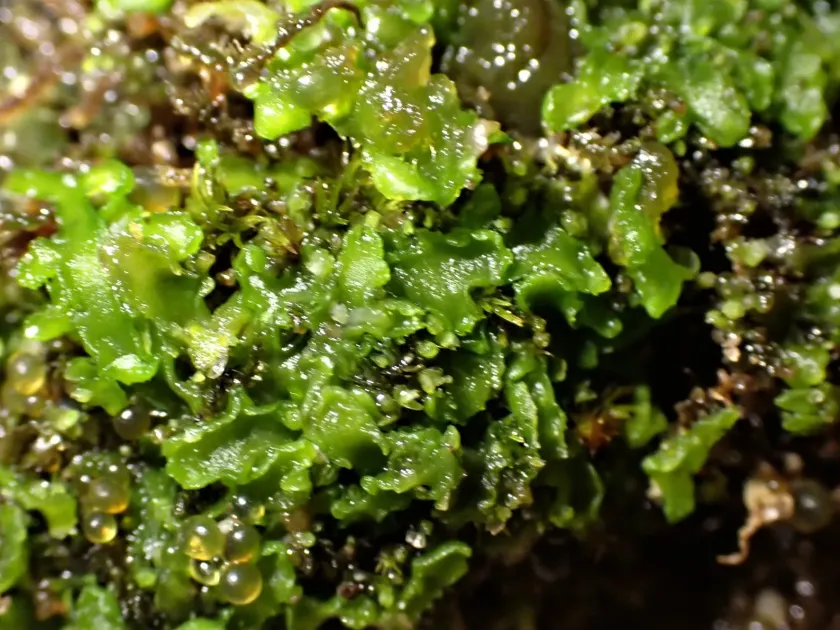
Botanically, Riccardia incurvata lacks true vascular tissues, roots, and leaves. Instead, it consists of a simple, flattened thallus with characteristic incurved margins, which allows the plant to adapt to its humid environment effectively.
Environmental requirements for this species are strictly centered on moisture availability. It is highly sensitive to desiccation and requires a micro-climate where humidity levels remain near saturation to maintain cell turgor and metabolic activity.
While this liverwort has no role in industrial agriculture, it is of significant interest to botanists and ecologists. It serves as an environmental indicator, as its presence often signals undisturbed and hydrologically stable wetland ecosystems.
Main diseases and pests
The primary threat to Riccardia incurvata populations is the destruction or alteration of wetland habitats. Land drainage and irrigation projects aimed at agriculture often lead to the rapid disappearance of the moss from the landscape.
Pollution from agricultural runoff, particularly high levels of nitrogen and phosphorus fertilizers, significantly damages the thalli. The accumulation of chemicals in the substrate alters the delicate ecological balance required for the moss to grow.
Competition from invasive vascular plants is another major threat. As nutrient levels in soil change due to human activity, faster-growing species often outcompete the liverwort for light and space in its native habitat.
Fungal pathogens can pose a localized threat to colonies, especially under conditions of stagnant water and high temperatures. These conditions favor the spread of rot, which can cause significant damage to the thalloid structure.
Climate change, resulting in erratic precipitation patterns and frequent droughts, presents a long-term risk. Without constant environmental moisture, the resilience of Riccardia incurvata colonies is severely compromised.