
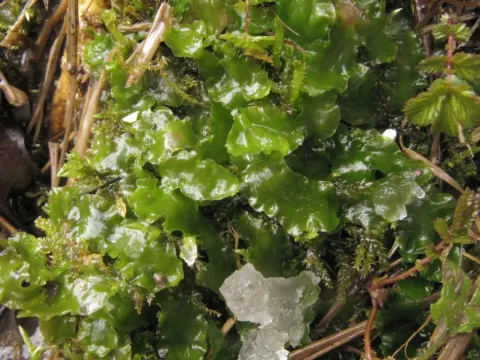
Aneura pinguis
Aneura pinguis
Aneura pinguis is a widely distributed thalloid liverwort within the Aneuraceae family. Its structure consists of a fleshy, ribbon-like thallus that lacks the complex organization of vascular plants.
What the section contains
Aneura pinguis
The plant thrives in diverse moist habitats globally, ranging from wetlands and marshy meadows to the damp crevices of shaded cliffs and decaying woody debris in temperate and tropical zones.
Growth requirements are primarily centered on constant moisture availability. The plant depends on high atmospheric humidity and a water-saturated substrate to maintain its physiological functions.
Regarding soil preferences, Aneura pinguis colonizes mineral-rich substrates, often favoring slightly acidic to neutral pH levels in areas with minimal competition from taller vegetation.
The lifecycle and reproductive strategy of this species are highly dependent on water, as its motile male gametes require a film of moisture to travel to the female reproductive organs for fertilization.
The primary threat to the stability of Aneura pinguis populations is the large-scale drainage of wetlands and peatlands for agricultural or urban development purposes.
Habitat fragmentation caused by human infrastructure disrupts the necessary hydrological continuity, making it difficult for the species to maintain its moisture-dependent growth cycle.
Excessive nutrient runoff from surrounding agricultural fields can lead to eutrophication, promoting the growth of algae and vascular plants that eventually outcompete the liverwort.
Climate change, manifesting as prolonged droughts and unpredictable shifts in rainfall patterns, poses a severe risk to the survival of moisture-sensitive bryophyte communities.
Mechanical destruction of the terrain, including soil compaction from livestock or heavy machinery, can irreversibly damage the delicate thalli of the plant colonies.