
Traganum moquinii
Traganum moquinii
Description
Growing requirements
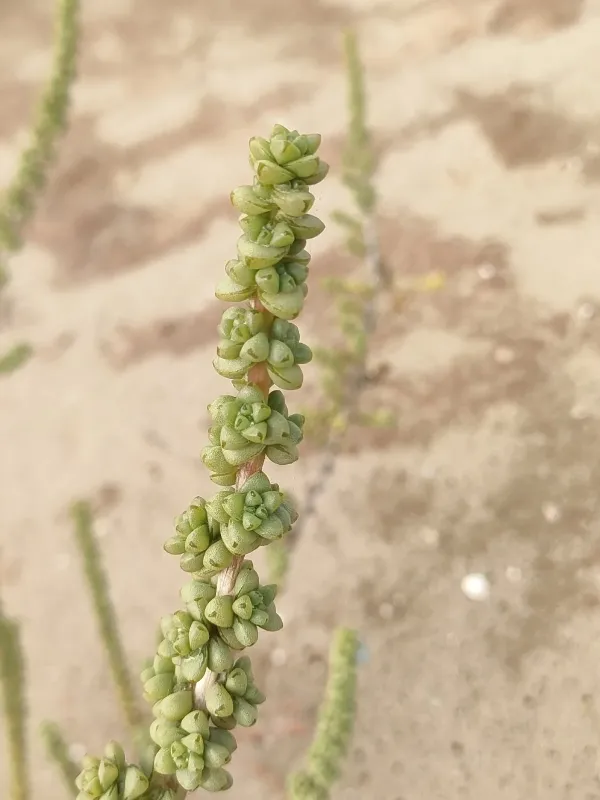
Traganum moquinii is a perennial shrub species belonging to the Amaranthaceae family, native to the Canary Islands. It is biologically classified as a halophyte, which means it has developed specific physiological adaptations to thrive in highly saline environments along coastal sandy areas.
The plant is characterized by its succulent leaves, which act as water storage organs, enabling survival in arid conditions with minimal precipitation. This adaptation allows the species to maintain its metabolic functions even when water availability in the soil is critically low.
Its root system is extensive and highly efficient at anchoring the plant within loose, unstable sandy substrates. This makes Traganum moquinii a vital ecological component in stabilizing coastal dunes, preventing wind erosion and maintaining soil integrity in harsh environments.
Regarding climate requirements, the plant demands significant solar radiation and exposure to direct sunlight. It is exceptionally resilient to salty sea sprays and can withstand extreme temperatures that typically inhibit the growth of conventional agricultural crops.
The species is strictly adapted to well-drained, sandy soils where nutrient levels are naturally low. From a technical perspective, its cultivation emphasizes the management of xerophytic traits, focusing on the plant's ability to recycle minerals while minimizing water loss through specialized leaf structures.