
Threlkeldia proceriflora
Threlkeldia proceriflora
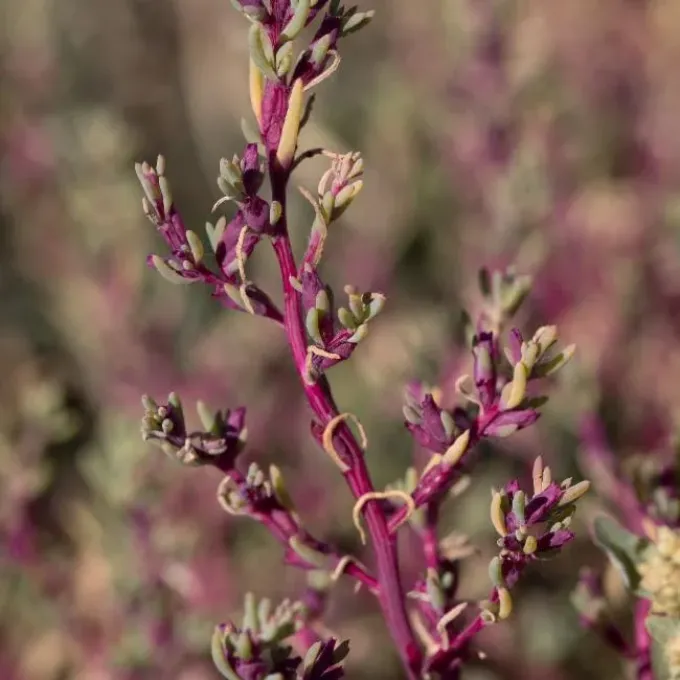
Description
Growing requirements
Threlkeldia proceriflora is a perennial subshrub belonging to the Amaranthaceae family. It is a highly specialized species native to arid and semi-arid regions of Australia, primarily known for its remarkable ability to withstand extreme salinity.
Botanically, the plant is characterized by its succulent-like properties, allowing it to store moisture during arid cycles. It features a branched growth habit that makes it suitable for ground cover in harsh environments.
The plant requires high light intensity and is perfectly adapted to climates with high diurnal temperature variations. It thrives in well-drained, saline, or alkaline soils where conventional crops would fail.
In terms of soil management, the plant does not require high levels of nitrogen fertilization, as it has adapted to nutrient-poor, high-salt substrates over evolutionary history.
Its хозяйственное usage is primarily focused on its potential as a supplementary fodder crop in salt-affected areas, offering a sustainable solution for livestock maintenance in degraded rangelands.
Main diseases and pests
The primary threats to Threlkeldia proceriflora populations include locusts and grasshoppers, which can cause severe defoliation during mass breeding cycles common in desert areas.
Fungal pathogens associated with root rot can become a significant issue if the plant is exposed to persistent waterlogging, which conflicts with its natural habitat requirements.
Overgrazing by wild and domestic herbivores is the most critical anthropogenic threat, as it prevents the plant from setting seeds and completing its life cycle.
Invasive weed species can outcompete young seedlings for limited water resources if the land is not managed with appropriate density control measures.
Maintaining biological diversity in the surrounding area is essential for natural pest control, as several predatory insects help manage the populations of potential crop pests.