
Kochia
Kochia
Description
Sowing dates
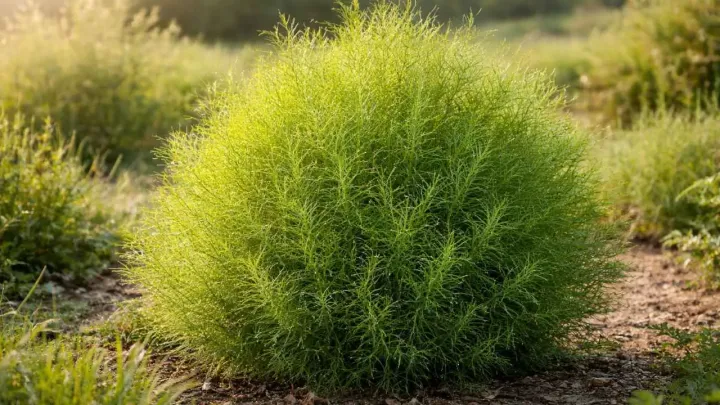
Kochia is an annual herbaceous plant belonging to the Amaranthaceae family (formerly classified within Chenopodiaceae). Native to the steppe and desert zones of Eurasia, this crop has developed high adaptability to extreme environmental conditions.
Sowing should be carried out early in the spring, once soil temperatures reach 8–10 degrees Celsius. Kochia seeds possess low germination energy, making mid-spring the optimal time for planting when moisture reserves in the upper soil layer remain sufficient.
To ensure uniform emergence, seeds should be sown at a depth of no more than 1–2 centimeters. For fodder production, a row cropping method with 30–45 centimeters between rows is typically employed, allowing the plant to utilize space effectively and accumulate biomass.
Planting density is a crucial management factor; excessive crowding hinders growth, whereas a moderate seeding rate encourages the development of a dense stand suitable for multiple cuttings. Rolling the soil after sowing is recommended to improve seed-to-soil contact.
The crop is noted for its ability to self-seed, which, under proper field management, allows for the maintenance of plant populations over several years without the need for additional investment in seed material.
Growing requirements
Kochia is highly light-demanding and performs poorly under even moderate shading, necessitating open, sun-exposed fields throughout the entire day for successful cultivation.
This crop is a champion of drought tolerance; its robust root system penetrates deep into the soil, enabling it to thrive in conditions of severe water deficiency. It performs excellently on saline and alkaline soils where many traditional agricultural crops fail to produce a yield.
The plant is not overly sensitive to soil mechanical composition, but it performs best in light sandy loams or loamy soils with good aeration. Excessive moisture and stagnant water are detrimental to Kochia, as they frequently trigger root rot and fungal pathogens.
With high salt tolerance, the plant is a valuable candidate for reclaiming degraded lands and rehabilitating saline soils. Kochia effectively extracts nutrients from deeper soil horizons, which contributes to improved soil structure over time.
Temperature is a key determinant for growth; the crop is heat-loving and remains in an active vegetative state only when stable high temperatures are present, yet it withstands extreme summer heat with ease.
Yield
The economic value of Kochia lies in its high productivity; under favorable conditions, the plant can produce 3–4 full harvests per season, generating a significant quantity of green fodder mass.
Green matter yields vary significantly depending on nitrogen availability and rainfall patterns, often ranging from 20 to 40 tons per hectare in irrigated systems or regions with adequate seasonal precipitation.
Nutritional value is high; during the budding phase, Kochia contains significant amounts of protein, carotene, and essential vitamins, making it an excellent component for the diets of cattle, sheep, and goats.
Beyond fodder applications, Kochia is utilized in landscape design, and specific varieties serve as raw material for technical purposes, such as brush production, due to the durability of its stems.
When harvesting for hay, it is essential to cut before the stems become woody, as quality decreases rapidly in later development stages due to a sharp increase in fiber content and reduced digestibility.
Main diseases and pests
Kochia possesses natural resistance to many pathogens, yet improper agricultural practices—specifically over-irrigation—can lead to outbreaks of powdery mildew and various root rot infections.
Among pests, wireworms and cutworms pose the greatest threat to young seedlings, as they can decimate a significant portion of the crop during the early stages of development.
Aphids may also colonize young shoots during dry periods, stifling plant growth and reducing overall harvest mass. The use of insecticides on fodder stands should be strictly managed, with a preference for biological control methods.
Weeds are primarily a threat during the initial seed germination phase. Because Kochia grows relatively slowly in the first 3–4 weeks, timely inter-row cultivation is critical for the success of the entire stand.
Crop rotation and preventing the accumulation of disease pressure in the soil are the primary methods for disease prevention, as specialized fungicides are rarely applied to this hardy forage crop.
Harvesting
Harvesting Kochia for green mass is performed during the active growth phase, before flowering, to preserve maximum nutritional value and prevent the stems from becoming too coarse.
For hay production, the use of mower-conditioners is advised to accelerate the drying process of the plant material, which is crucial for minimizing vitamin loss during the curing process.
When used for silage, the crop should be chopped and packed into silos or trenches, ensuring proper compaction to create the anaerobic conditions necessary for efficient fermentation.
If the goal is seed production, harvest should take place at full maturity when seeds turn dark brown, typically using direct combining methods during morning hours to minimize seed shattering.
Kochia regenerates quickly after cutting; therefore, with sufficient moisture, multiple successive harvests are possible, significantly increasing the total output of dry matter per unit area.