
Kalidium foliatum
Kalidium foliatum
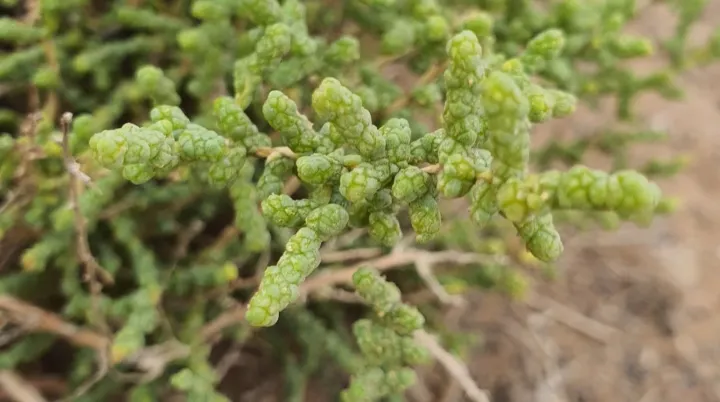
Description
Growing requirements
Kalidium foliatum, commonly known as a member of the Amaranthaceae family, is a highly resilient subshrub adapted to extreme saline environments. It is a perennial plant that thrives in ecological niches where typical field crops fail due to soil toxicity.
The natural range of the species extends across arid regions of Central and Middle Asia. It is primarily found in salt deserts and saline basin areas where it plays a critical role in preventing soil erosion and maintaining regional biodiversity.
Botanically, the plant is characterized by its succulent, fleshy stems and leaves, which serve as storage organs for water. This structural adaptation is essential for surviving in arid climates with high evapotranspiration rates.
To cultivate Kalidium foliatum effectively, one must ensure the soil is sufficiently saline, as the plant is an obligate halophyte. It requires full sun exposure and minimal competition, growing well in the harsh, high-pH soil conditions that characterize saline flats.
The agrotechnology for this species is largely focused on establishment through direct seeding. Once the plants are rooted, their maintenance is negligible, as they possess natural resistance to most agricultural pests and diseases.
Yield
The economic utilization of Kalidium foliatum is centered on its value as a forage source in desert livestock management. It remains a reliable food supply for camels and sheep when traditional pasture grasses have withered.
A significant agronomic advantage is its ability to perform bioremediation. By absorbing excess salts from the root zone, the plant improves soil quality over time, allowing for the eventual reclamation of barren, salt-crusted fields.
The yield potential of the biomass is tied to moisture availability and the level of salinity in the root zone. Under managed conditions with saline irrigation, the plant can produce substantial amounts of organic matter, which can be harvested periodically.
Propagation is typically achieved through seeds, which exhibit good longevity and germination rates under proper environmental cues. It is advisable to sow in areas where deep roots can access subsoil moisture to ensure long-term stability.
Beyond animal husbandry, interest in this species is growing in the field of industrial ecology. The high mineral content of its tissues and its environmental hardiness make it a sustainable candidate for greening efforts in arid and degraded territories.