
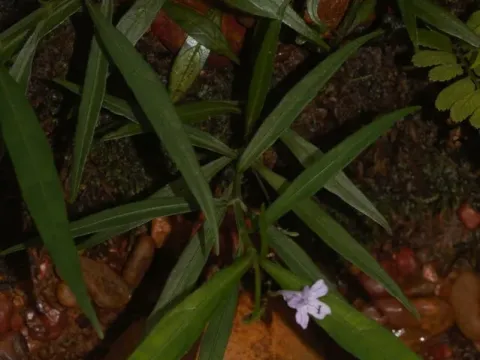
Ruellia longifolia
Ruellia longifolia
The sowing of Ruellia longifolia seeds is best scheduled for late winter or early spring. Starting early allows the plant to establish a robust vegetative system before the shorter days of autumn approach.
What the section contains
Ruellia longifolia
Seeds should be placed on the surface of a well-draining, nutrient-rich substrate. Since they require light for germination, it is crucial not to bury them deeply, but rather to press them gently into the moist soil.
Maintaining a consistent environment is essential during the initial growth phase. Covering the seed tray with a clear plastic dome helps to retain humidity and stabilizes the temperature around 24 degrees Celsius.
Once seedlings have developed their first true leaves, they should be carefully transplanted into individual pots. High-quality potting mixes designed for tropical species are recommended to ensure optimal root development.
Proper ventilation during the seedling stage is just as important as humidity control. Periodically airing out the seed container prevents the development of fungal damping-off, which is common in stagnant air.
Ruellia longifolia, a member of the Acanthaceae family, originates from the tropical regions of South America. It thrives in conditions that mimic its native habitat: warm, humid, and brightly lit, but without direct sun exposure.
The soil requirements prioritize a loose, fertile structure. A mixture containing organic humus, peat moss, and perlite provides the necessary drainage while holding sufficient moisture to satisfy the plant's needs.
Watering frequency should be adjusted based on seasonal activity. During the peak growing season, the soil must be kept consistently moist; however, water should never be allowed to accumulate in the drainage tray.
Temperature management is critical for this species. It prefers a steady range between 18 and 25 degrees Celsius and should be protected from cold drafts or sudden temperature drops that could trigger dormancy.
Humidity levels should ideally remain above 60 percent. In domestic settings, using a pebble tray or a humidifier will significantly improve the overall vitality and appearance of the foliage.
Spider mites are the most persistent pest for Ruellia longifolia, especially in environments where the air is dry. They typically congregate on the underside of leaves, causing a stippled, faded appearance.
Whiteflies can also pose a significant challenge. These insects congregate on young shoots and, if left unmanaged, can drain the plant's resources and lead to severe yellowing of the leaves.
Root rot, driven by overwatering or compacted soil, remains the most common physiological threat. If the soil does not drain effectively, the roots will quickly decay, leading to irreversible plant decline.
Preventative measures include maintaining good airflow and ensuring the plant is not overcrowded. Regularly cleaning the leaves with a damp cloth can also help remove dust and potential pest infestations.
If chemical intervention becomes necessary, systemic insecticides or horticultural oils should be used according to the manufacturer's guidelines, ensuring the application is thorough enough to reach hidden pests.