
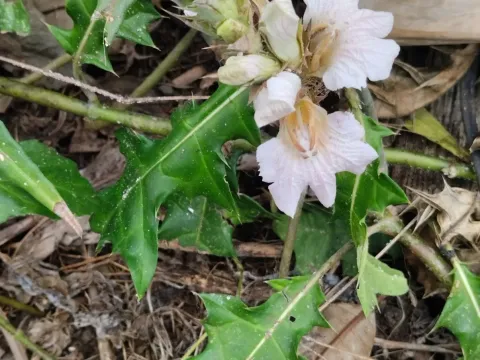
Mountain acanthus
Acanthus montanus
The propagation of Acanthus montanus is primarily achieved through seed sowing or rhizome division. Seeds should be sown in a high-quality, well-draining potting mix during the early spring months to ensure a long growing season.
What the section contains
Mountain acanthus
Germination requires consistent temperatures between 20°C and 25°C. Providing bottom heat can significantly improve the success rate and speed up the emergence of the seedlings.
Rhizome division is best performed when the plant is dormant or just starting its new spring growth. Carefully separating healthy rhizome segments ensures that each new section has adequate roots for establishment.
Once seedlings have developed their first true leaves, they should be transplanted into individual pots to allow for robust root development before moving to their permanent outdoor location.
Acclimatization to outdoor conditions is a vital step before planting. Gradually exposing the young plants to natural light and ambient temperatures prevents transplant shock.
Acanthus montanus belongs to the Acanthaceae family and thrives best in tropical climates. It is a shade-tolerant plant that prefers filtered light to protect its large foliage from direct, scorching sun.
The plant requires deep, fertile, and well-drained soil. It is particularly sensitive to waterlogged conditions, which can quickly lead to root rot; therefore, soil structure and drainage are paramount.
Temperature sensitivity is a key factor; as a tropical species, it cannot withstand freezing temperatures. In cooler climates, it must be grown in containers that can be moved indoors during winter.
Watering should be balanced. While the plant appreciates consistent moisture during the growing season, it is essential to allow the top layer of soil to dry out slightly between watering cycles.
Regular fertilization with a balanced NPK fertilizer during the active growing phase encourages vigorous growth and sustains the health of its characteristic deep-green, decorative leaves.
Slugs and snails are the primary pests that damage the foliage of Acanthus montanus. Implementing physical barriers like copper tape or using biological control agents is recommended to protect the leaves.
Spider mites can be a significant issue in low-humidity environments or indoor settings. Regular misting and maintaining optimal humidity levels help keep the mite population under control.
Fungal leaf spots can occur when air circulation is poor or the foliage remains wet for extended periods. Pruning congested areas helps to improve airflow and reduce infection risks.
Root rot is the most serious threat, usually caused by overwatering or poorly draining soil. If detected early, the plant may be saved by repotting into fresh, airy substrate and reducing irrigation.
Routine monitoring of the plant’s health is crucial. Early detection of any yellowing or stunted growth allows for prompt intervention with appropriate horticultural practices or treatments.