
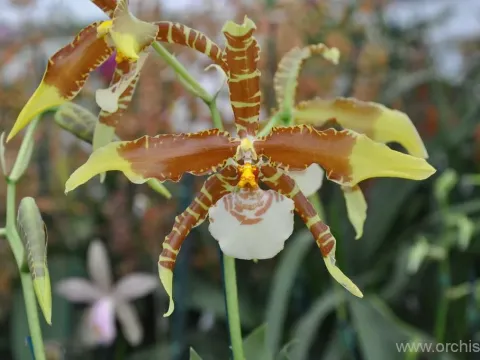
Odontoglossum grande
Odontoglossum grande
Odontoglossum grande is a magnificent orchid species belonging to the Orchidaceae family. Naturally occurring as an epiphyte in the high-altitude cloud forests of Guatemala and southern Mexico, it is highly prized for its large, tiger-striped flowers.
What the section contains
Odontoglossum grande
Cultivation requires specific environmental conditions, particularly a cool climate. The plant thrives when there is a significant drop in temperature at night, ideally ranging between +12°C and +15°C, to ensure healthy growth and robust flowering cycles.
The potting medium must be exceptionally well-draining and airy. A professional mix consisting of medium-grade pine bark, perlite, and a small portion of sphagnum moss is recommended to maintain the perfect balance between moisture retention and airflow.
Bright, indirect light is essential for Odontoglossum grande. While it needs plenty of light to photosynthesize effectively, direct sunlight during the hottest part of the day can cause leaf scorch, necessitating the use of sheer curtains or shading.
Humidity management is crucial for this species. To mimic its natural habitat, growers should aim for a relative humidity of approximately 60–70%. Regular misting, the use of humidifiers, or pebble trays with water can help maintain these parameters.
The primary threat to Odontoglossum grande is root rot caused by stagnant water or overwatering. If the substrate remains waterlogged for extended periods, the root system loses its ability to absorb nutrients, leading to rapid plant decline.
Pest infestations, particularly spider mites and scale insects, are common in environments with inadequate humidity. These pests thrive in dry air and can quickly weaken the plant by feeding on the sap of the leaves and pseudobulbs.
Integrated pest management involves the use of horticultural oils or specialized insecticides. Regular monitoring of the plant foliage, especially the undersides of leaves, is necessary to catch and treat outbreaks before they become severe.
Bacterial and fungal infections, such as black rot, are often triggered by poor ventilation and water accumulation in the plant's crown. Keeping the foliage dry and ensuring constant air movement around the plant is vital for disease prevention.
Balanced fertilization during the active growing season is recommended to promote development. However, excessive application of fertilizers can lead to salt accumulation in the potting medium, which may damage the sensitive roots of the orchid.