
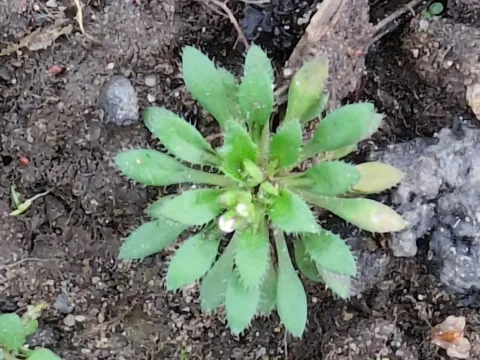
Common Whitlowgrass
Erophila majuscula
As a true spring ephemeral, the growth cycle of Erophila majuscula begins immediately after the winter snow melts.
What the section contains
Common Whitlowgrass
The plant demonstrates a rapid germination process, taking advantage of the early spring moisture available in the soil surface layers.
In agricultural settings, autumn-germinated seedlings overwinter in a rosette stage, which allows for early development.
Flowering typically commences in early spring, often coinciding with the early stages of winter crop regrowth.
The entire life cycle is completed within a few weeks, ensuring the plant produces seeds before the onset of summer drought conditions.
This member of the Brassicaceae family is highly adaptable to various ecological conditions and soil types.
It prefers well-drained, sandy, or light-textured soils that allow for quick warming during the early spring period.
The plant requires high light intensity and performs poorly in shaded areas, making open fields ideal for its propagation.
Nutrient requirements are relatively low, allowing it to colonize disturbed or impoverished sites effectively.
It is remarkably tolerant to the temperature fluctuations typical of the transition period between winter and spring.
Being a cruciferous species, it acts as a secondary host for several diseases affecting major crops like oilseed rape.
Common pathogens including clubroot and various forms of downy mildew can thrive on this species during the early season.
It serves as a primary food source for crucifer flea beetles, which can migrate from the weeds to cultivated fields.
Aphids frequently colonize the succulent stems of the plant in early spring, creating a reservoir for infestation.
Agricultural management should focus on mechanical disturbance of the soil surface to prevent the plant from reaching the seed-setting stage.