
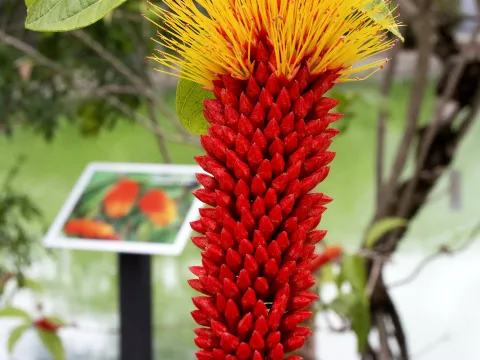
Combretum aubletii
Combretum aubletii
Combretum aubletii is a distinguished member of the Combretaceae family, commonly recognized as a tropical liana or shrub. Its native distribution centers on the tropical landscapes of Central and South America.
What the section contains
Combretum aubletii
The crop thrives in nutrient-dense, well-draining soils with a slightly acidic profile. Water management is critical; the root system is highly susceptible to hypoxia if the soil remains saturated for extended periods.
Regarding climate, this species demands tropical temperatures ranging from 22°C to 30°C. It lacks cold hardiness and must be protected from chilling events, which significantly impede its vegetative growth.
Photosynthetic efficiency is maximized under high solar radiation. Growers should select locations that provide full exposure, ensuring the canopy receives consistent light to support its characteristic flowering cycles.
Agronomic management involves structural support systems. Because Combretum aubletii is naturally adapted to climb toward the forest canopy, installing robust trellises is essential for commercial or decorative cultivation.
Pest pressure on Combretum aubletii typically includes spider mites and various scale insects. These pests thrive in warm, sheltered microclimates, requiring consistent scouting and integrated pest management strategies.
Root rot pathogens represent a primary biological threat. Preventative maintenance, such as ensuring adequate soil permeability and avoiding over-irrigation, is the most effective approach to minimize damage.
Foliar diseases, including leaf spot fungi, can proliferate during periods of high humidity. Improving airflow through selective pruning is a necessary cultural practice to reduce infection risks.
Nematode infestations can become problematic in sandy soil conditions. Crop rotation or the use of soil solarization techniques are common methods to keep populations below the economic injury level.
Maintaining balanced soil fertility is crucial for plant vigor. Excessive nitrogen application can create succulent growth that is more attractive and vulnerable to secondary pests and pathogens.