
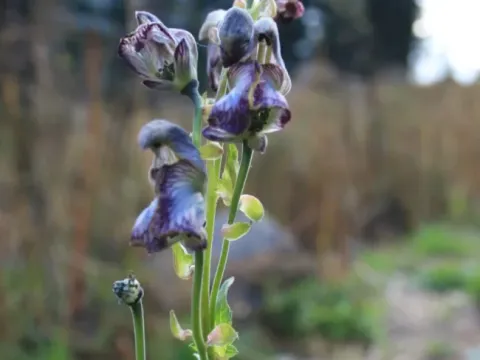
Aconitum heterophyllum
Aconitum heterophyllum
Sowing seeds of Aconitum heterophyllum is best performed in late autumn as a winter sowing, since the seeds require a long period of natural stratification to germinate successfully.
What the section contains
Aconitum heterophyllum
For spring sowing, seeds must undergo artificial stratification in a refrigerator at temperatures between +2 and +5 degrees Celsius for at least two to three months before being planted.
The seeds should be sown at a shallow depth of 1-2 centimeters in well-drained, loose soil to facilitate the emergence of fragile seedlings.
Growing seedlings in containers before transplanting is recommended to ensure better survival rates and stronger plant development during the initial growing season.
Space the plants approximately 30-40 centimeters apart to allow for proper air circulation, which is crucial for preventing diseases in the humid microclimate of the canopy.
Aconitum heterophyllum belongs to the Ranunculaceae family and is naturally adapted to alpine environments, requiring a cool climate and consistent moisture to thrive.
The ideal planting site provides partial shade, as the plants are sensitive to intense direct sunlight, which can cause leaf necrosis and physiological stress.
Soil requirements include excellent drainage combined with high organic matter content. Waterlogging must be avoided at all costs, as the tuberous roots are prone to rapid rot.
Incorporating compost or leaf mold into the soil helps maintain fertility and improves the structural integrity of the root zone, supporting long-term plant health.
Mulching the soil around the base of the plants is recommended to stabilize soil temperature and moisture levels, especially during warmer summer months.
Yield for Aconitum heterophyllum is measured by the biomass of the harvested tuberous roots, which typically reach maturity and peak active ingredient concentration after 3-4 years.
While the initial growth rate is slow, proper field management, including balanced fertilization and weed control, significantly improves the overall quality of the medicinal harvest.
Because the plant's development is gradual, economic planning should focus on long-term crop cycles rather than immediate annual biomass returns.
The harvest focuses on roots, though aerial parts may occasionally be collected. Productivity is maintained by providing optimal soil conditions and avoiding excessive soil compaction.
Sustainable cultivation practices, such as rotating crops or allowing fallow periods, ensure the health of the planting site over many years of production.
Common threats include root rot and fungal infections, particularly during periods of high rainfall or in soils with inadequate drainage systems.
Pests such as aphids and nematodes can infest the plant, causing stunted growth and increasing susceptibility to secondary viral or bacterial pathogens.
Powdery mildew may occur when humidity levels are high and airflow around the leaves is restricted, necessitating prompt removal of infected plant tissue.
- Routine monitoring for signs of pest damage or fungal pathogens.
- Application of prophylactic organic treatments to maintain plant vigor.
- Effective weed suppression to eliminate alternate hosts for pests.
- Ensuring optimal spacing to maximize airflow within the plant canopy.
Early identification of infected plants and their immediate removal is essential to stop the spread of disease within the crop plantation.
Harvesting is performed in the autumn once the aerial parts have naturally withered, indicating that energy reserves have transitioned into the root system.
The roots must be dug up carefully using specialized tools to prevent bruising or breaking, as damaged roots are highly susceptible to spoilage during drying.
Once harvested, the roots are thoroughly cleaned of all soil and debris, rinsed in fresh water, and trimmed of unnecessary side rootlets.
Drying occurs in a well-ventilated, shaded area or a temperature-controlled dryer kept below 45 degrees Celsius to preserve the potent medicinal alkaloids.
The final product must be stored in secure, clearly labeled containers, given the extreme toxicity of Aconitum species and the need for safe handling.