
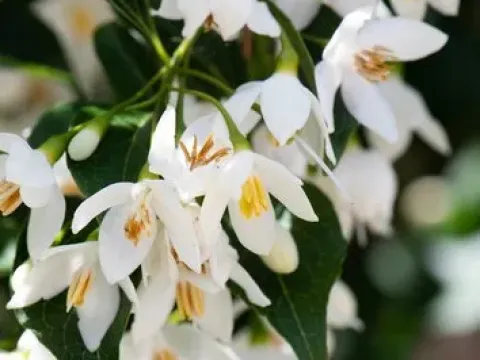
Hemsley storax
Styrax hemsleyanus
Hemsley storax (Styrax hemsleyanus) is a deciduous flowering tree belonging to the Styracaceae family. It is native to temperate forests in China and is highly regarded in horticulture for its spectacular pendulous racemes of white flowers.
What the section contains
Hemsley storax
Botanically, the species is characterized by its broad, oval leaves and smooth bark. It typically reaches a stature of 6 to 15 meters, making it an excellent specimen plant for parks and large private gardens.
Successful cultivation requires deep, well-draining, and moisture-retentive soil rich in organic matter. The optimal soil pH should range from slightly acidic to neutral to ensure proper nutrient uptake.
The tree thrives in locations with partial shade or full sun, provided that the root zone remains consistently cool and moist. In hotter climates, protection from the intense afternoon sun is highly recommended to prevent leaf scorch.
Young trees require consistent irrigation, especially during the first three years of establishment. Applying organic mulch around the base helps regulate soil temperature and moisture levels throughout the growing season.
Root rot is the most significant threat to the health of Hemsley storax, typically triggered by waterlogged conditions. Proper site selection and soil amendment with organic matter are essential preventative measures.
Pests such as spider mites may affect the foliage during hot and dry spells. Integrated pest management, including regular water spraying of the canopy, can effectively mitigate these populations without excessive chemical use.
Powdery mildew can occur in environments with poor air circulation or high humidity. Pruning to maintain an open canopy structure is recommended to enhance airflow and reduce the likelihood of fungal infections.
Chlorosis is frequently observed when the soil pH is too high, leading to iron deficiency. Incorporating chelated iron or acidic amendments can help restore the natural green color of the leaves.
Bark wounds caused by maintenance machinery or improper pruning are prone to secondary infections. Always use sterilized tools for maintenance and treat any physical damage to the wood immediately.