
Bigleaf snowbell
Styrax grandifolius
Description
Growing requirements
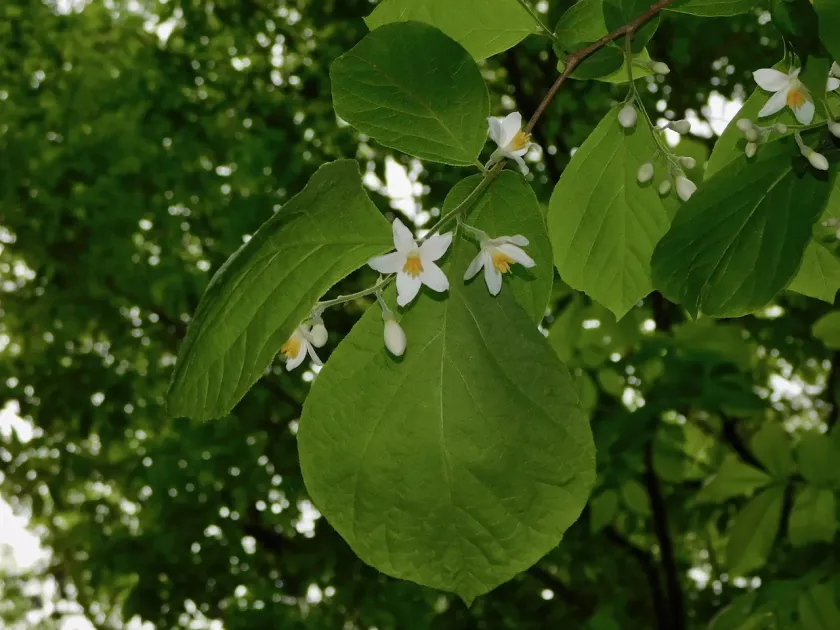
The Bigleaf snowbell (Styrax grandifolius) is a deciduous shrub or small tree belonging to the Styracaceae family. Native to the southeastern United States, it thrives in woodland environments, typically found on slopes and in well-drained, nutrient-rich soil habitats.
The plant requires acidic, humus-rich soil to thrive. It is essential that the soil is moist but well-drained, as the species is sensitive to waterlogged conditions which can lead to root system decay in heavy clay soils.
In terms of light exposure, Bigleaf snowbell performs best in partial shade. While it can tolerate dappled sunlight, protection from harsh, direct afternoon sun is crucial to prevent leaf scorch and maintain the overall health of the shrub.
Climate adaptation is a key factor for successful cultivation. The shrub requires a relatively humid atmosphere and should be sheltered from drying winds. In colder zones, applying a generous layer of organic mulch around the base protects roots from extreme temperature fluctuations.
Cultural practices involve supplemental watering during dry spells. As a slow-growing specimen in many conditions, it is important to provide sufficient space for root development without competition from invasive weeds or nearby aggressive plants.
Main diseases and pests
Styrax grandifolius is generally resistant to serious pests. However, root rot caused by Phytophthora species remains the most significant threat, especially when planting in soils with poor drainage characteristics.
Occasional infestations of aphids or spider mites can occur during prolonged hot and dry periods. If noticed, these can be managed with insecticidal soaps or neem oil applications applied to the foliage during the cooler parts of the day.
Chlorosis is a frequent issue in soil that is too alkaline, preventing the uptake of essential nutrients like iron. Monitoring the soil pH and amending it with elemental sulfur or peat moss is standard practice for maintaining vibrant, green leaves.
Powdery mildew can affect the foliage if there is poor airflow within the shrub's canopy. Proper pruning practices to allow for better air circulation and sunlight penetration into the center of the plant significantly mitigate this risk.
Physical damage from wildlife, such as deer browsing or small rodents chewing on the bark during winter, can also pose a threat. Using protective mesh or tree guards is recommended if these animals are prevalent in the cultivation area.