
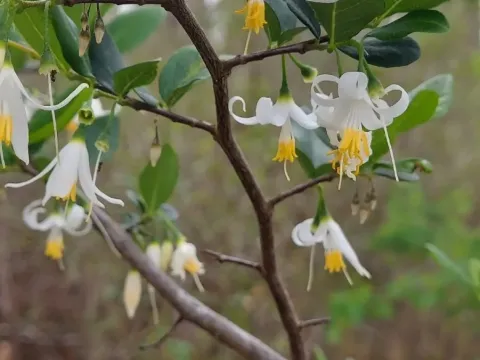
American snowbell
Styrax americanus
The American snowbell (Styrax americanus) is a deciduous shrub belonging to the Styracaceae family. Native to the southeastern United States, it is typically found in moist, low-lying habitats such as swamps, riverbanks, and floodplains.
What the section contains
American snowbell
To successfully cultivate this species, it requires moist, organically rich, and well-draining soils. It is particularly sensitive to soil conditions and thrives best in slightly acidic to neutral substrates that retain moisture without being waterlogged.
In terms of climate, it prefers regions with moderate temperatures and sufficient rainfall. While it can tolerate partial shade, a location that offers dappled sunlight is ideal for promoting healthy flower production and maintaining leaf color.
Botanically, it is recognized by its delicate, pendulous white flowers that bloom in late spring. The plant features simple, alternate leaves that contribute to its graceful, open habit, making it an attractive choice for gardens.
Host use of the American snowbell is primarily ornamental. It is frequently employed in landscape architecture for naturalizing wet areas, decorating pond margins, or as an understory shrub in shaded garden settings.
The American snowbell is generally hardy and resistant to many pests, but it can occasionally be affected by powdery mildew, particularly when air circulation is poor or humidity levels remain high for extended periods.
Like many ornamental shrubs, it may occasionally host common garden pests such as aphids or spider mites, which can drain nutrients from new growth if the plant is already under stress.
Root rot represents the most significant threat to the survival of the shrub, usually caused by planting in heavy clay soils where excess moisture accumulates around the root zone.
Proper pruning practices are essential to keep the interior of the shrub clear, which minimizes the risk of fungal infections and allows for better light penetration.
Maintaining a balanced soil nutrient profile through organic mulching helps the plant withstand environmental pressures, reducing the need for chemical intervention against common diseases.