
Yellowhorn
Xanthoceras sorbifolium Bunge
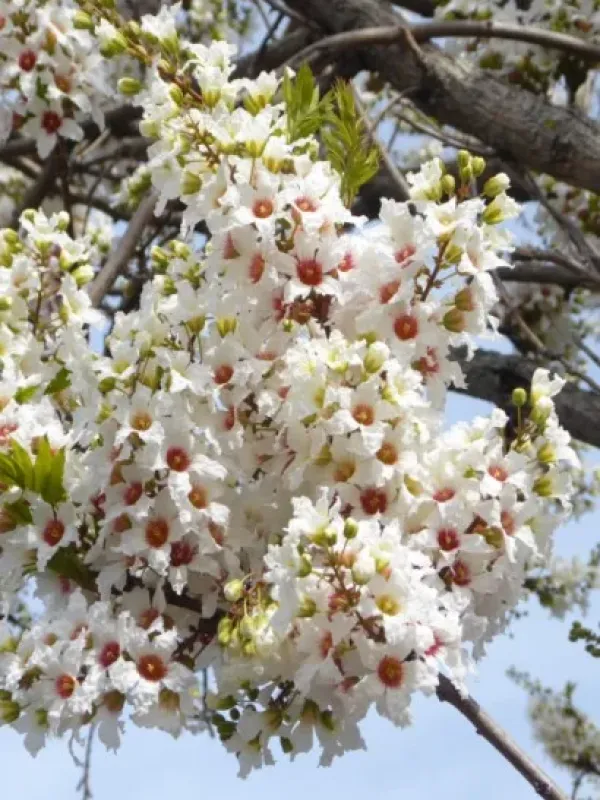
Description
Sowing dates
Yellowhorn seeds should ideally be sown in the autumn directly into the ground to allow for natural stratification throughout the winter. If planting is delayed until spring, the seeds require artificial stratification in moist sand at low temperatures for 2–3 months to break dormancy.
The seeds should be planted at a depth of 3–5 cm in well-drained soil. Selecting an appropriate site with good drainage is critical, as stagnant water during the germination period often leads to seed rot.
For container cultivation, seeds can be sown in pots in early spring. Maintaining a steady temperature around 20–22 degrees Celsius ensures uniform emergence. Young seedlings are fragile and should be handled with care when transplanting to their permanent location.
It is crucial to avoid damaging the taproot during transplantation. Using the transfer method with the entire soil ball intact is recommended for higher survival rates of young trees.
The optimal spacing for commercial plantations is approximately 4–5 meters apart. This ensures adequate access to sunlight and proper air circulation, which are essential for healthy tree development and consistent fruit production.
Growing requirements
Yellowhorn is a sun-loving plant that thrives in open, sunny locations. It requires full solar exposure for successful vegetative growth and optimal nut production. Shade-grown specimens often suffer from poor fruit yields and structural weakness.
This species is highly drought-tolerant, making it well-suited for regions with variable rainfall. Its deep root system allows it to reach moisture reserves, ensuring survival during long, dry summer spells.
It adapts to various soil types but prefers deep, light-textured sandy loam or loamy soils with a neutral to slightly alkaline pH. Waterlogged or swampy conditions are detrimental and must be avoided for long-term health.
Belonging to the Sapindaceae family, Yellowhorn is remarkably cold-hardy and can withstand temperatures as low as -30 degrees Celsius. This resilience makes it a prime candidate for cultivation in temperate climates with harsh winters.
Beyond its culinary utility, the plant is valued for its high resistance to urban pollution. It is frequently utilized in urban landscape design for its beautiful white flowers and striking foliage.
Yield
Fruit production generally begins 4 to 6 years after planting, with commercial yields peaking as the trees mature between 10 and 15 years of age. Productivity is heavily dependent on favorable weather during the flowering period.
The fruits are woody capsules containing several rounded seeds that resemble hazelnuts in texture and flavor. The seeds are highly valued for their high oil content, which can reach up to 60% of the seed's weight.
Pollination is a key factor for yield, as the trees require cross-pollination. Planting multiple trees within the same vicinity is highly recommended to improve nut set and overall yield per tree.
The oil derived from Yellowhorn seeds is of premium quality, featuring a high concentration of unsaturated fatty acids. It is widely considered a healthy alternative to traditional cooking oils and is also used in high-end cosmetic products.
Regular maintenance pruning is recommended to stimulate the growth of fruit-bearing branches. Removing old or damaged wood helps manage tree health and keeps the plant's resources directed toward fruit development.
Main diseases and pests
Yellowhorn possesses a strong natural immunity to many common fruit tree diseases. This characteristic makes it an excellent choice for low-input agriculture and organic gardening practices.
Excessive soil moisture can lead to root rot or fungal issues affecting the root collar. Ensuring the site is well-drained and managing irrigation carefully are the best preventative measures against these problems.
While pests are generally uncommon, aphids may occasionally attack young growth in spring. If infestation levels are significant, targeted biological control or mild organic insecticidal soaps can be used.
Sunscald on the trunks can occur in young trees, especially during early spring when temperatures fluctuate. Whitewashing the trunks with a diluted lime solution is an effective traditional practice to prevent bark cracking.
In some regions, protection against rodents may be necessary during the winter months, especially for young saplings where the bark is still tender and vulnerable to girdling.
Harvesting
Harvesting should occur when the fruit capsules begin to crack open naturally, typically in late August or September. Timely collection is essential to prevent the seeds from dropping to the ground and being lost.
The fruits are usually picked by hand or using garden shears. If the capsules are harvested while still slightly closed, they can be spread out in a dry, ventilated area to finish ripening and fully open.
Once extracted, the seeds must be thoroughly dried at room temperature. Proper drying reduces moisture content to a safe level, which is critical for preventing mold growth during long-term storage.
The nuts should be stored in cool, dry, and well-ventilated conditions, preferably in cloth bags. This storage method ensures the longevity of the seeds and preserves their nutritional and culinary qualities.
In addition to human consumption, the oil processed from these nuts has industrial potential. Its stability and composition make it an interesting subject for research in various bio-based product sectors.