
Woerlitz Horse Chestnut
Aesculus woerlitzensis
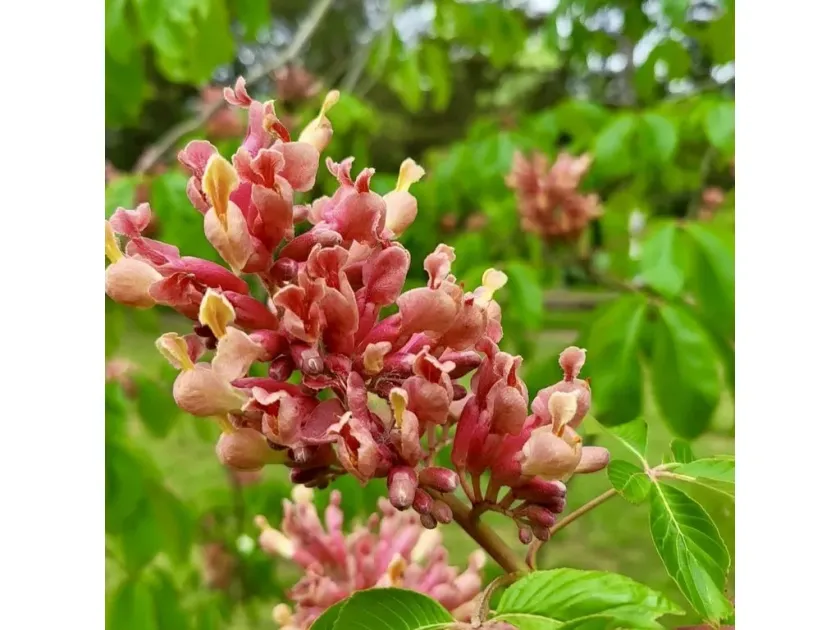
Description
Growing requirements
The Woerlitz Horse Chestnut (Aesculus woerlitzensis) is a distinguished hybrid belonging to the Sapindaceae family. Known for its aesthetic appeal, this tree serves as a prominent feature in temperate botanical gardens and parks, tracing its origins to Germany.
Regarding soil requirements, the species thrives best in deep, fertile, and well-drained loam. While it is adaptable to various soil types, maintaining a neutral to slightly acidic pH is essential for nutrient absorption and optimal canopy development.
In terms of climate, the tree prefers locations that provide protection from strong, desiccating winds and excessive summer heat. Proper hydration is critical, especially during the initial stages of establishment, to ensure the plant reaches its full ornamental potential.
Agrotechnical maintenance focuses on providing adequate space for root expansion and crown spread. Seasonal fertilization, typically performed in early spring, helps maintain vigor and resilience against environmental stressors.
The primary utility of this culture is found in ornamental horticulture. It is frequently employed in urban planning, park design, and as a centerpiece in large residential gardens due to its majestic stature and dense shade-providing foliage.
Main diseases and pests
The most significant threat to the health of Aesculus woerlitzensis is the Horse Chestnut Leaf Miner, which can lead to premature leaf drop and stunted growth. Integrated pest management strategies, including the use of systemic treatments, are recommended.
Furthermore, various fungal infections, such as Guignardia leaf blotch, can affect the foliage during humid conditions. Maintaining good air circulation within the canopy through proper pruning practices significantly reduces the risk of fungal spread.