
Jaboticaba
Myrciaria cauliflora (Mart.) O. Berg
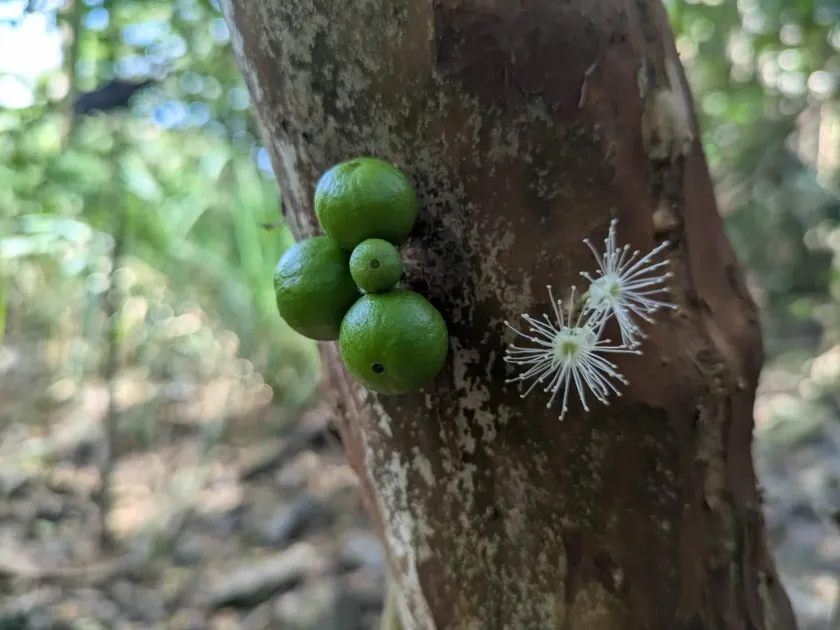
Description
Sowing dates
Propagation of jaboticaba (Myrciaria cauliflora), a member of the Myrtaceae family, is typically achieved through seeds. Because seeds lose viability rapidly, they should be sown immediately after extraction from the ripe fruit into a well-moistened, nutrient-rich substrate.
The germination process is slow, generally taking between 20 to 40 days. Seedlings develop very gradually, which is a characteristic trait of this species.
Vegetative propagation, such as grafting or cuttings, is less common due to the difficulty of rooting. Grafted trees reach the fruiting stage much faster, typically within 3–5 years, whereas seedlings may take 8–15 years to bloom.
Planting saplings in their permanent location requires well-lit areas protected from strong winds, providing ample space for the crown to develop its characteristic structure.
In commercial orchards, trees are planted with sufficient spacing to ensure free air circulation, which is critical for preventing fungal diseases in the dense canopy.
Growing requirements
Jaboticaba is a heat-loving plant that thrives best in tropical and subtropical climates with temperatures ranging from +20°C to +30°C. It is highly sensitive to frost, which can cause significant damage or death to young trees.
The crop requires fertile, deep, and slightly acidic soils rich in organic matter. Good drainage is essential, as waterlogged conditions in the root zone can lead to root rot and other physiological issues.
Consistent and abundant irrigation is necessary, especially during dry seasons. Humidity plays a vital role in the tree's health, and in drier regions, overhead irrigation systems are often employed.
For successful cultivation, balanced fertilizers with a focus on micronutrients should be applied, as jaboticaba is prone to chlorosis in alkaline soils.
The tree is famous for its cauliflory, a phenomenon where flowers and fruits develop directly on the trunk and main branches, requiring careful maintenance of the tree's bark.
Yield
The yield of jaboticaba varies depending on the tree's age and environmental conditions. Mature, healthy trees can produce multiple harvests throughout the year under optimal climate settings.
The fruits have a spherical shape, dark purple to black skin, and a gelatinous, sweet pulp. They are highly valued for their taste and are commonly used to produce jams, jellies, wines, and liqueurs.
Harvesting requires great care, as fruits ferment quickly once ripe. They must be picked manually as soon as they reach full maturity to maintain their quality and flavor profile.
While an individual tree can produce a significant volume of fruit, the labor-intensive harvesting process means the crop is primarily grown in home gardens or on specialized small-scale farms.
Fresh fruit has a short shelf life of only 2–3 days, so commercial operations often focus on immediate processing into juices or preserved products.
Main diseases and pests
The primary threat to jaboticaba is rust disease caused by various fungi, which is especially prevalent in high-humidity conditions with poor airflow through the canopy.
Common pests include aphids and scale insects, which attack young shoots and leaves, extracting sap and reducing the overall vigor of the tree.
Spider mites can also become a problem during prolonged dry spells. Pest control involves the use of contact and systemic insecticides where necessary.
Improper watering or heavy soil types can trigger root rot, which is difficult to treat and often leads to the decline and death of the specimen.
Regular sanitary pruning is recommended to improve light penetration and air movement within the crown, serving as an effective preventive measure against many pathogens.
Harvesting
Harvesting jaboticaba is entirely manual because the fruits are attached directly to the trunk and branches. Mechanical harvesting is not feasible due to the risk of damaging the tree's bark.
Maturity is determined by the skin color, which turns from green to a deep purple or black. Unripe fruits are overly astringent and are not suitable for fresh consumption.
Since fruit maturation is asynchronous, the harvest season extends over several weeks, necessitating repeated passes through the orchard to collect quality fruit at the right time.
Post-harvest, fruits should be cooled rapidly if intended for the fresh market to preserve their texture and sweetness before shipping.
The unique cauliflory habit requires pickers to be cautious; the use of ladders or equipment must be managed to avoid applying pressure directly to the productive parts of the trunk.