
Camu camu
Myrciaria dubia (Kunth) McVaugh
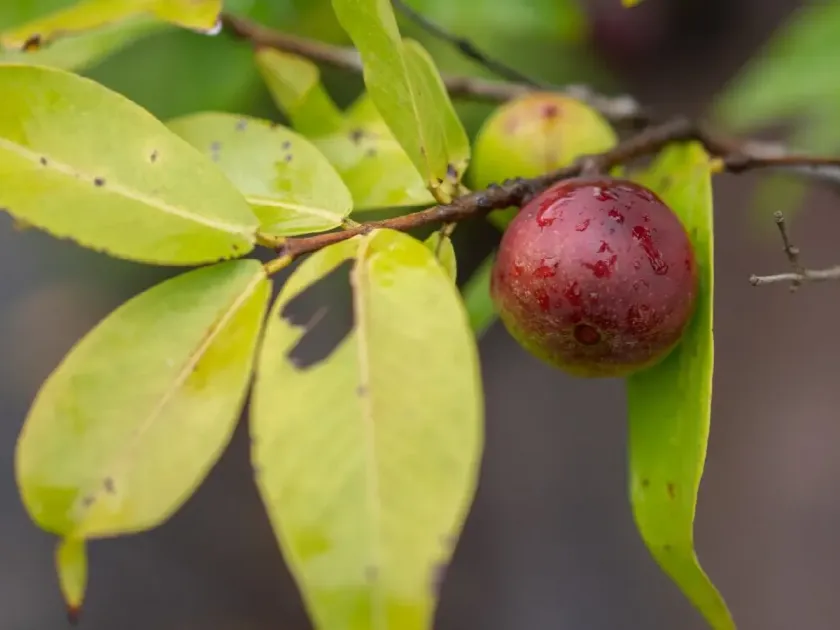
Description
Growing requirements
Camu camu is a tropical shrub belonging to the Myrtaceae family, native to the swampy riverbanks of the Amazon and Orinoco basins. The plant is highly hygrophilous and capable of enduring prolonged flooding, making it a unique candidate for hydrophilic agriculture in tropical zones.
To ensure successful growth, the crop requires consistently high temperatures, ideally ranging between 20 and 30 degrees Celsius, with no exposure to frost. Optimal development is achieved under conditions of high ambient humidity and abundant rainfall throughout the entire vegetative period.
Soil requirements involve using alluvial soils, rich in organic matter and nutrients, with an acidic pH balance. The plant adapts well to areas with excessive moisture, yet when cultivated outside natural flood zones, it requires regular irrigation to maintain high tissue turgor and metabolic activity.
Agronomic techniques include planting specimens with sufficient spacing, as the shrub can grow up to 3–5 meters in height and develop a dense canopy. Sparse planting patterns are essential for improved ventilation, which is crucial for preventing fungal infections in high-humidity environments.
The primary economic use of camu camu focuses on its fruits, which are globally recognized as a superfood due to their exceptionally high vitamin C content. Beyond fresh consumption, the berries are processed into concentrated powders, juices, and dietary supplements for the pharmaceutical industry.
Main diseases and pests
The crop is susceptible to various pathogens common in humid tropical rainforests, including fungal infections that target foliage and fruit sets. Excessive humidity in the absence of proper aeration often triggers mold development on the berries during the ripening phase.
Among pests, the greatest threats include insects that damage young shoots and specific types of scale insects, which can reduce overall bush productivity. Constant monitoring of the canopy allows for early detection of infestation sites and the implementation of localized sanitary treatments.
Restrictions on the use of chemical pesticides are often applied because the fruits are frequently consumed raw and exported as an eco-friendly product. Preference is given to biological pest control methods and maintaining the natural balance of the local ecosystem.
The risk of root rot arises when soil drainage properties are compromised or when water remains stagnant without oxygen circulation. Agronomists recommend strict adherence to spacing guidelines when planting to minimize the spread of infection between adjacent plants.
Disease prevention involves regular canopy pruning to improve sunlight penetration and air circulation to the inner branches. Removing diseased parts of the plant must be performed immediately upon detection of symptoms to ensure the safety and quality of the final harvest.