
Cotinifolia fig
Ficus cotinifolia
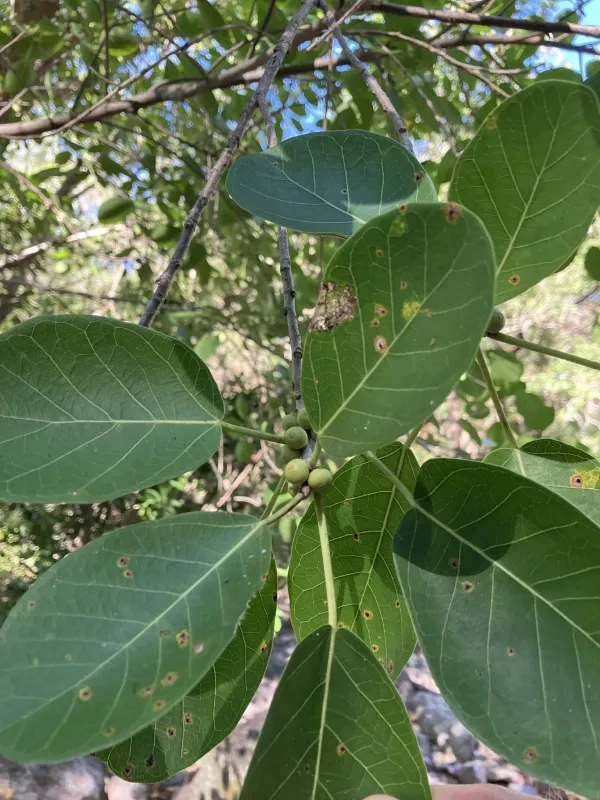
Description
Growing requirements
The Cotinifolia fig (Ficus cotinifolia) is a prominent species within the Moraceae family. It is recognized as a hardy evergreen tree that often displays vigorous growth, making it a subject of interest for tropical arboriculture.
Native to regions spanning from Mexico to Central America, this plant is well-adapted to warm, humid environments. In its natural habitat, it functions as a critical component of the local ecosystem, providing shelter and food for various species.
Agronomically, this crop requires well-drained, nutrient-rich soil to thrive. It performs best in substrates that mimic forest soil, characterized by high organic matter content and a neutral to slightly acidic pH level.
Climatic requirements are strict: the tree demands consistently warm temperatures. It lacks frost tolerance, which restricts its cultivation to tropical and subtropical zones where seasonal temperature drops remain well above freezing.
Management practices include regular canopy maintenance and nutrient supplementation. Controlled irrigation is vital; while the plant enjoys humidity, waterlogged soil must be strictly avoided to preserve root integrity and overall tree health.
Main diseases and pests
Common pests affecting Ficus cotinifolia include scale insects and mealybugs. These sap-sucking insects often colonize the underside of leaves and young shoots, causing significant vigor loss and secondary fungal infections.
Spider mites are frequently encountered during dry, hot weather conditions. Their feeding behavior leads to chlorosis, manifesting as yellow stippling on the foliage, which can escalate to significant defoliation if left untreated.
Fungal pathogens such as leaf spot are standard threats to commercial plantations. These infections spread rapidly during periods of high humidity and poor air movement, necessitating strategic spacing of trees to ensure optimal airflow.
Root rot, primarily caused by Phytophthora or Pythium species, remains the most devastating condition for this culture. It is almost exclusively the result of improper drainage or over-irrigation protocols in the nursery or orchard.
Integrated Pest Management (IPM) is highly recommended for this crop. By combining biological controls, such as introducing predatory mites, with careful water management, producers can ensure robust tree health without excessive reliance on synthetic pesticides.