
Castilla elastica
Castilla elastica
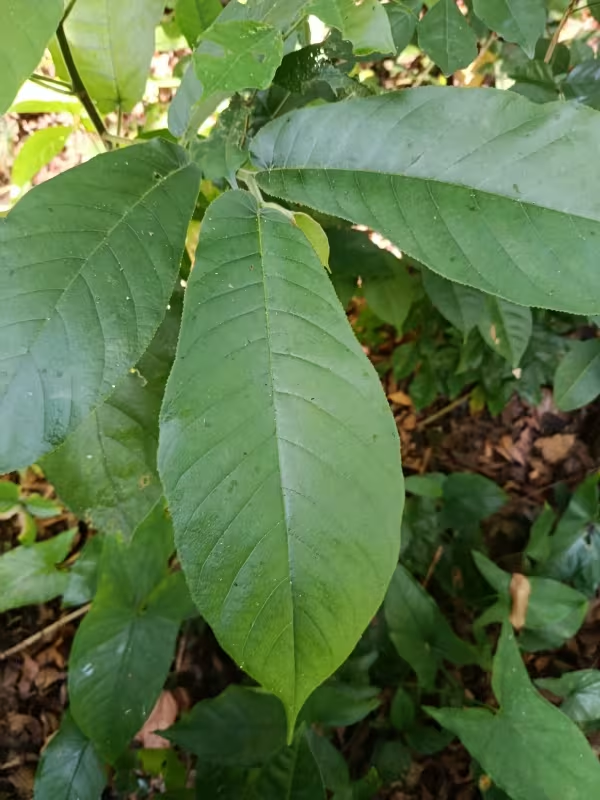
Description
Sowing dates
Propagation of Castilla elastica in commercial plantations is primarily carried out using seeds. Due to the low viability of the seeds, they must be sown in soil or nurseries immediately after harvesting while maintaining high humidity levels.
Optimal germination requires soil temperatures ranging from 25 to 30 degrees Celsius. Seeds should be planted in loose, well-draining soil, protecting young seedlings from direct sunlight during their first months of growth.
When transplanting to a permanent site, it is recommended to maintain a spacing of 4 to 6 meters between trees. This provides sufficient space for the development of a robust root system and the formation of a wide canopy.
The species is fast-growing, allowing for the initiation of tree training and management at an early stage. Intensive care during the sapling phase is crucial to ensure high survival rates and uniform growth across the plantation.
While stem cuttings are possible, seed propagation is preferred as it produces a more stable and vigorous main trunk, which is essential for long-term latex production and structural integrity.
Growing requirements
Castilla elastica is an evergreen tree belonging to the Moraceae family that thrives in tropical climates with consistent rainfall. It does not tolerate prolonged dry seasons and requires high ambient humidity to remain productive.
Deep, fertile loamy soils with neutral to slightly acidic pH levels are ideal for cultivation. Protection from strong winds is a critical requirement, as the tree has relatively brittle branches that can easily break during storms.
The plant is photophilic but prefers partial shade during its juvenile stages under a forest canopy. As the tree matures, it becomes more tolerant of direct sunlight, although peak latex production is achieved in humid tropical forest conditions.
The temperature should not fall below 15 degrees Celsius, as frost is lethal to this species. High average annual temperatures facilitate active metabolic processes and the synthesis of rubber latex within the plant tissues.
Standard agronomic practices include regular mulching of the tree base to retain soil moisture and suppress weeds, effectively mimicking the natural microclimate of tropical regions.
Yield
The primary product is latex, harvested through regular tapping of the trunk. Yield is highly dependent on the tree's age, diameter, and the specific tapping techniques employed, ranging from simple incisions to spiral patterns.
Initial latex harvesting can commence when the tree reaches 7 to 10 years of age, provided the trunk has achieved sufficient thickness. Productivity correlates directly with the metabolic health of the tree during each growth season.
Average dry rubber yields vary significantly based on genetic material quality and plantation management practices. Castilla elastica was historically intercropped with other species, which impacted overall plantation output.
Strict adherence to tapping schedules is necessary to prevent tree exhaustion and a decline in latex concentration. A sustainable, conservative tapping regime is recommended to allow the bark tissues sufficient time to regenerate.
Modern processing methods also allow for the extraction of secondary biopolymers from the bark, which increases the total economic value of each individual tree within the plantation system.
Main diseases and pests
The main threats to the health of the tree include root rot, which typically develops due to poor soil drainage or waterlogging. Fungal pathogens thrive in tropical moisture, requiring constant monitoring of the bark and root zone.
Pests such as mealybugs and scale insects can attack young leaves and shoots, draining nutrients and stunting growth. If infestations occur, sanitation and targeted control measures are necessary to prevent spread.
The tree is sensitive to mechanical damage on the trunk, which provides entry points for various infections. Poorly executed tapping often results in damage to the cambium, inviting wood-boring pests and fungal colonization.
Competition from aggressive weeds during the early years can suppress growth; therefore, active management of the area surrounding the tree base is a mandatory part of maintaining a healthy plantation.
In regions where the plant is introduced, local phytophagous species may adapt to feeding on Moraceae foliage, necessitating integrated biological pest management to protect the integrity of the stand.
Harvesting
Harvesting involves making deliberate incisions into the tree bark, allowing the milky sap to flow. The sap is collected in designated containers and then processed through coagulation using acidic or enzymatic agents.
The best time for harvesting operations is during the early morning hours, when internal pressure within the vascular system is highest, which facilitates a more vigorous flow of latex.
The tapping process requires skilled labor to avoid damaging the cambium, which is responsible for bark regeneration and the tree's future productivity in subsequent harvest cycles.
Collected latex is cleaned of botanical impurities and debris, filtered, and subjected to evaporation or centrifugation to obtain high-quality technical raw material suitable for vulcanization.
Harvest frequency can range from daily to weekly cycles depending on the tree's condition and the overall management strategy adopted by the plantation administration.