
Broad-leaved Fig
Ficus platyphylla
Description
Growing requirements
The Broad-leaved Fig (Ficus platyphylla) is a significant species belonging to the Moraceae family. This tree is native to the tropical regions of West and Central Africa, where it thrives in savanna and woodland environments.
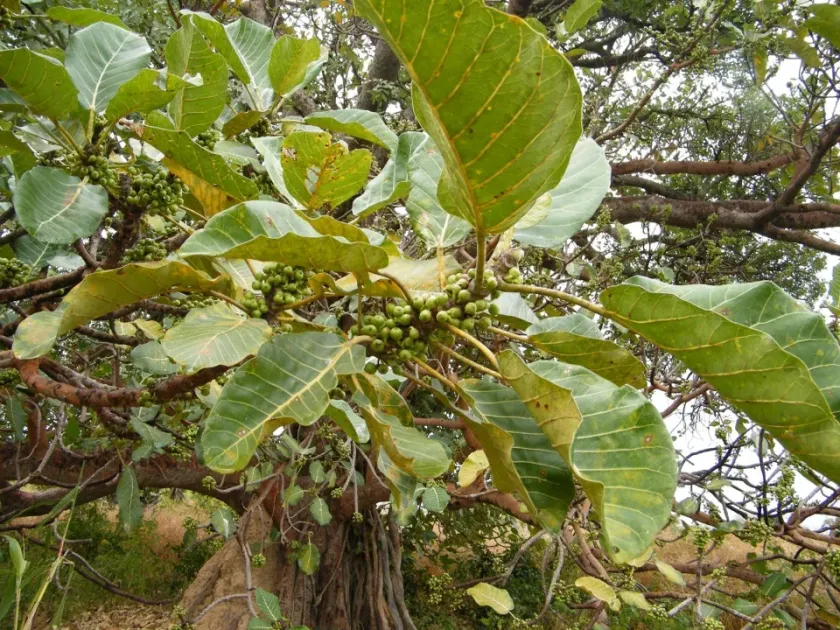
Botanically, this species is recognized for its large, leathery leaves and a robust, spreading habit. In its natural habitat, it serves as an important source of forage for local wildlife due to its fleshy fruits.
Cultivation requires a stable tropical climate with warm temperatures throughout the year. It does not possess frost tolerance, making it suitable for greenhouses or warm indoor environments in temperate zones.
The soil must be well-draining and rich in organic matter. A mixture of loam, peat, and perlite is often recommended to maintain the necessary moisture levels while preventing root asphyxiation during irrigation.
Light exposure is a critical factor for canopy development. The plant prefers bright, indirect light, though mature specimens can withstand direct sunlight if acclimated correctly over a period of several weeks.
Main diseases and pests
Pest pressure often involves spider mites, especially in low-humidity environments. These mites feed on the underside of the leaves, causing stippling and eventual leaf drop if left untreated.
Mealybugs are another common threat, often gathering in the leaf axils. Their presence can stunt growth and promote the development of sooty mold on the honeydew they secrete during feeding.
Root rot represents the primary agricultural threat caused by improper watering techniques. Overwatering combined with poor soil aeration creates the perfect conditions for soil-borne pathogens.
Fungal leaf spot infections occur when moisture lingers on the foliage for extended periods. Improving airflow around the plant is the most effective cultural practice to mitigate these risks.
Management strategies involve integrated pest management, utilizing both mechanical removal for minor infestations and targeted application of horticultural oils or systemic insecticides for larger outbreaks.