
Toona ciliata
Toona ciliata M. Roem.
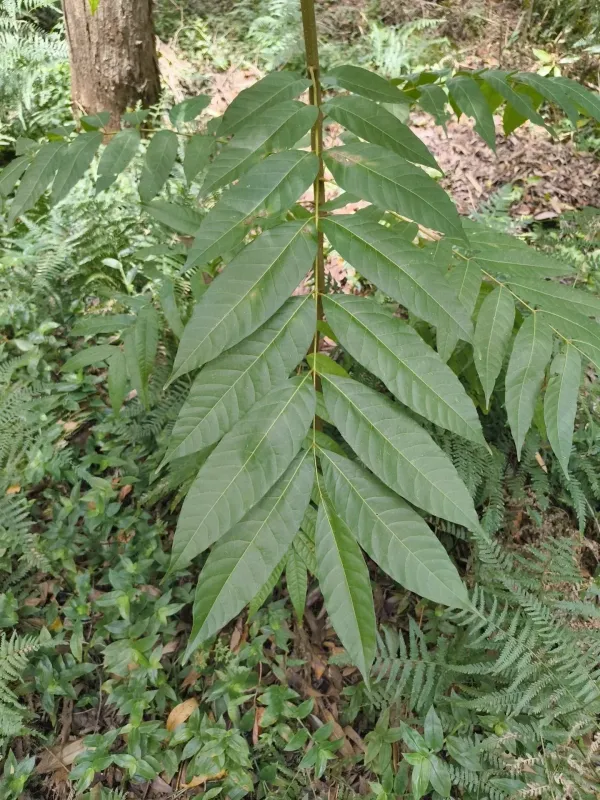
Description
Growing requirements
Toona ciliata, commonly referred to as the Australian red cedar, is a prominent member of the Meliaceae family. It is recognized for its rapid growth rate and the high commercial value of its durable, reddish timber.
The species is native to a broad range spanning from tropical Asia to eastern Australia. It thrives in humid tropical and subtropical environments, requiring high annual rainfall for optimal development.
Successful cultivation depends heavily on soil quality. The species requires deep, fertile, and well-drained loamy soils, as it is particularly susceptible to root damage caused by waterlogged or compacted terrain.
Regarding light, it is a pioneer species that demands full sun for vigorous growth, although seedlings benefit from partial shade during their earliest developmental stages.
Beyond timber production, this tree is a valuable component in agroforestry systems, providing shade for sensitive understory crops and contributing to soil stability through its root structure.
Main diseases and pests
The most significant biological pest affecting the commercial cultivation of Toona ciliata is the shoot borer moth, Hypsipyla robusta. Larvae of this moth destroy the leading shoot, causing stunted growth and severe branching.
In addition to pests, the crop is susceptible to various fungal pathogens when grown in environments with poor air circulation or excessive moisture, leading to damping-off in the nursery stage.
Management strategies often involve the selection of resistant genotypes and the implementation of mixed-species plantation models, which interrupt the lifecycle of the shoot borer.
Chemical control, while possible, is often restricted by environmental regulations, leading practitioners to prefer biological control agents or integrated pest management protocols.
Continuous monitoring and early detection of pest symptoms are essential to maintain the structural integrity of the main trunk, which is the primary driver of economic yield.