
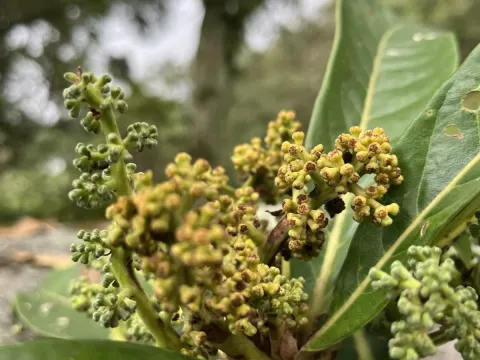
Aniba
Aniba
Aniba belongs to a genus of evergreen trees that do not reproduce via traditional field sowing methods in their natural environment. Propagation is primarily carried out by seeds within specialized nurseries in tropical regions.
What the section contains


Aniba
Aniba seeds have extremely low longevity, so they must be planted immediately after collection to maintain embryo viability. The germination process requires high humidity and a constant temperature near 25-28 degrees Celsius.
In their natural habitat, young seedlings develop slowly, often under the canopy of the mother forest. For cultivated growth, creating artificial shade during the first year of the plant's life is necessary.
Transplanting into open ground is performed only after the seedling reaches a height of 40-50 centimeters and forms a strong root system. It is vital to avoid root damage during planting, as this significantly reduces survival rates.
Agronomists emphasize that large-scale cultivation of Aniba requires strict adherence to silvicultural practices, as the crop is extremely sensitive to microclimate changes caused by deforestation.
Aniba is part of the Lauraceae family and is a typical inhabitant of the humid tropical forests of the Amazon. For normal growth, the crop requires consistently high temperatures without sharp seasonal fluctuations.
The plant prefers deep, well-drained alluvial soils rich in organic matter. Waterlogging is fatal to most species of this genus, despite their preference for humid air.
The optimal rainfall level for Aniba is at least 2000–2500 mm per year, with the absence of a distinct dry period being crucial. The plant does not tolerate direct sunlight at a young age.
Soil acidity should remain within a slightly acidic range, which is typical for forest soils in the tropical belt. The culture is extremely demanding regarding humus levels, so mineral fertilizers are often replaced with mulching.
- High air humidity (above 80%).
- Protection from strong winds and direct midday sun.
- Temperature optimum: 22–30 degrees Celsius.
The economic value of Aniba lies not in fruit production but in the accumulation of essential oil within the wood and leaves. The main yield indicator is the output of rosewood oil (linalool).
The yield of woody biomass depends on planting density and the age of the plantation, which is typically exploited for decades. Industrial use takes into account the percentage of oil content in the stem of the tree.
Modern sustainable forest management methods involve partial pruning of branches instead of clear-cutting. This allows for annual raw material extraction while supporting biomass regeneration.
Essential oil yield varies depending on the species and growth conditions. Wild specimens may accumulate more valuable compounds than plantation-grown ones due to the long accumulation cycle of aromatic compounds.
The economic efficiency of Aniba plantations is long-term, as the tree only begins to provide commercial wood suitable for distillation upon reaching maturity.
The primary threat to Aniba is the destruction of its habitat due to tropical rainforest logging. The slow growth rate makes the crop vulnerable to rapid changes in anthropogenic conditions.
Among the pests, various types of wood borers are significant, as they attack the plant's stem, reducing wood quality and essential oil accumulation. Pest control in tropical conditions is quite difficult.
Fungal root diseases can develop if soil drainage is compromised. This leads to the gradual dieback of the tree tops and a decrease in the immunity of the entire plantation.
Uncontrolled phytophagous activity can cause damage to young seedlings in nurseries, making regular inspection of the plantations a mandatory agrotechnical measure.
Chemical protection is practically not applied in the humid tropical climate, as it disrupts the ecological balance and the quality of the final essential oil.
Harvesting raw material for essential oil distillation involves collecting branches and fragments of wood. The process must be organized so as not to harm the viability of the tree itself.
Harvesting is done selectively: only parts where the concentration of aromatic compounds reaches its maximum are cut. Branches are shredded before being sent to distillation to increase oil yield.
Traditionally, harvesting was done through predatory methods, but modern agroforestry implements principles of careful pruning. This allows the tree to recover and continue growing for many years.
Harvest timing is not tied to a strict calendar schedule, but experienced harvesters avoid periods of intense sap flow to ensure the plant is not weakened before the rainy season.
After harvesting, the woody material must be delivered to the processing complex as quickly as possible, as essential oil evaporates rapidly when stored in the open air for long periods.