
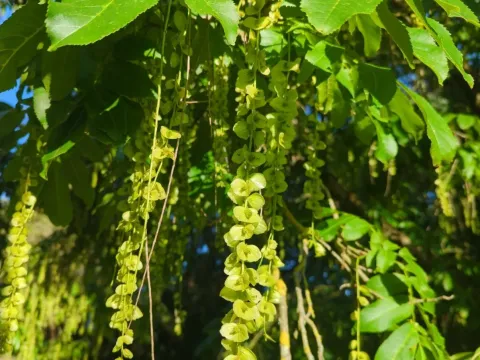
Wingnut
Pterocarya Kunth
Wingnut, taxonomically identified as Pterocarya, belongs to the Juglandaceae family. These large deciduous trees are native to humid forests across East Asia and parts of the Caucasus region.
What the section contains
Wingnut
The culture requires deep, fertile, and consistently moist soil to thrive. It performs best in riparian environments where water access is abundant throughout the growing season.
Climate adaptability varies by species, but generally, Pterocarya prefers mild temperate zones with sufficient rainfall and protection from harsh, drying winds in the winter.
Agricultural management includes space allocation for the tree's expansive crown and careful selection of a site that prevents root suffocation in compacted clay soils.
In terms of economic utility, Wingnut is prized for its attractive drooping catkins in landscaping, as well as its timber, which is used for fine furniture and veneers due to its durability.
Common threats to Pterocarya involve soil-borne fungal pathogens, particularly if the site lacks adequate drainage, leading to root rot and eventual decline.
Pests such as leaf miners and defoliating caterpillars occasionally infest the foliage, though healthy, well-established trees are typically able to withstand such stressors.
Disease management focuses on ensuring proper ventilation within the canopy and avoiding physical damage to the trunk, which can act as an entry point for wood-decay fungi.
Environmental stressors like prolonged summer drought pose a significant risk, often leading to leaf scorch and early senescence, which weakens the tree's overall vigor.
Integrated pest management protocols, including monitoring and biological control, are recommended for large-scale forest or park plantations to maintain tree health.