
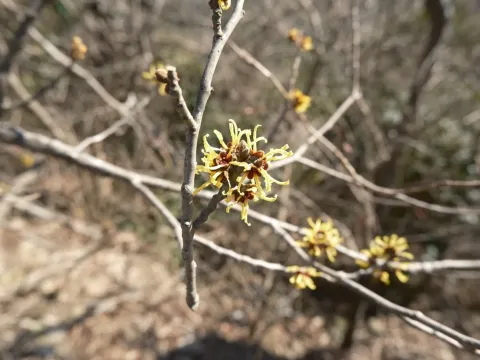
Chinese witch hazel
Hamamelis mollis
Chinese witch hazel, scientifically known as Hamamelis mollis, is a deciduous shrub within the Hamamelidaceae family, native to central and eastern China. It is highly valued in horticulture for its spectacular, fragrant yellow flowers that emerge during the winter and early spring.
What the section contains
Chinese witch hazel
The plant thrives in full sun or light shade and requires protection from cold, drying winds. It prefers deep, rich, moist, but well-drained acidic to neutral soil. Poorly drained, heavy clay soils or highly alkaline substrates are generally unsuitable and can cause chlorosis or root rot.
Agronomic management includes maintaining consistent soil moisture, especially during the establishment phase. Applying a layer of organic mulch around the root zone helps regulate temperature and moisture levels, protecting the shallow root system from extreme fluctuations.
The shrub is known for its slow-growing, spreading habit, which requires minimal pruning. Maintenance pruning should focus on removing dead or diseased wood immediately after the flowering period to preserve the natural structural integrity of the plant.
Beyond its ornamental utility in landscape design and public gardens, the plant has a historical application in medicine due to the astringent and anti-inflammatory properties found in its bark and leaves, often used in skincare formulations.
Hamamelis mollis is generally robust, but it can be susceptible to leaf spot diseases or powdery mildew in areas with poor airflow or high humidity. Ensuring proper spacing between plants is a crucial preventive measure for long-term health.
While the shrub rarely suffers from major pest infestations, aphids can occasionally gather on new growth. Management involves monitoring the foliage during spring and applying appropriate horticultural soaps or biological control agents if the pest population causes visible damage.