
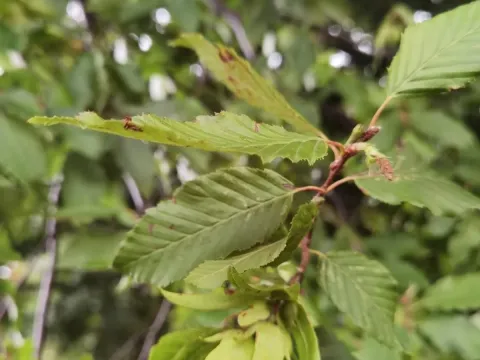
Hornbeam
Carpinus L.
Hornbeam (Carpinus) belongs to the Betulaceae family. It is typically propagated using seeds collected in autumn once they reach full physiological maturity.
What the section contains


Hornbeam
Seeds of the Carpinus genus exhibit deep dormancy and require a long period of cold stratification to ensure uniform germination in the nursery.
Sowing is performed in late autumn for winter stratification or in early spring if the seeds have been pre-treated in cold storage for 90 to 120 days.
For forestry plantation purposes, nursery-grown seedlings are preferred due to their established root systems and higher success rate in open fields.
The spacing for planting is determined by the end-use, ranging from dense rows for hedges to wider spacing for quality timber and biomass production.
Hornbeam is a shade-tolerant species that thrives in deep, fertile, and well-drained soils, showing a preference for slightly alkaline or neutral pH levels.
The species requires a temperate climate with consistent moisture levels; it does not tolerate waterlogging or long periods of extreme drought.
As a robust hardwood, it is well-suited for temperate forestry and can regenerate effectively from coppicing, making it a sustainable choice for woodland management.
Young plants require protection from intensive direct sunlight and aggressive weed competition during the first 3 to 5 years of establishment.
Standard silvicultural practices involve thinning the canopy to allow sufficient light penetration for natural regeneration and growth of younger specimens.
Powdery mildew is the most common fungal disease affecting foliage, particularly in nurseries or densely planted areas with poor air circulation.
Leaf-eating insects, including caterpillars and various larvae, can cause significant defoliation, potentially reducing the overall annual growth increment.
Stem cankers and wood-rotting fungi may attack trees that have sustained mechanical damage or are stressed due to poor soil conditions.
Integrated pest management strategies are recommended, focusing on maintaining healthy stands through regular thinning and the removal of infected material.
Although generally resilient, the health of the hornbeam stand relies on monitoring for early signs of pathogen outbreaks, particularly during wet and warm seasons.
The harvest of hornbeam is typically carried out using sustainable forestry cycles, focusing on timber production or wood biomass for high-energy fuel.
Rotation ages vary depending on the target dimensions of the wood, with many stands managed through coppicing cycles every 20 to 30 years.
Timber harvesting is usually done in the dormant season to ensure the highest quality of the wood and to minimize damage to the surrounding ecosystem.
Modern logging equipment allows for efficient processing, but selective logging is often prioritized to promote the continuous cover forestry model.
Post-harvest management includes assessing the regeneration rate of the stump sprouts to determine the success and timing of the next cycle.