
European hornbeam
Carpinus betulus L.
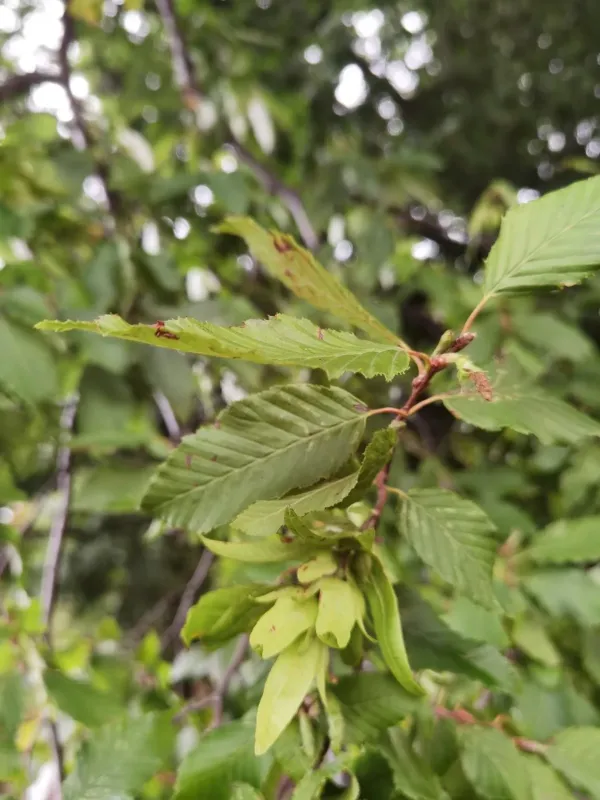
Description
Sowing dates
The European hornbeam (Carpinus betulus L.) is a member of the birch family (Betulaceae). In forestry, it is primarily propagated from seeds collected in autumn and sown either directly or after stratification.
Seeds require a cold stratification process to break dormancy, typically lasting several months under controlled temperature conditions to ensure successful germination.
When sowing in nurseries, seeds are covered with a thin layer of soil, usually 2–3 cm deep, and mulched to maintain moisture and prevent soil compaction.
Vegetative propagation via cuttings is less common in forest planting but is frequently utilized in nursery production to maintain specific aesthetic characteristics for landscaping.
Young plants exhibit slow initial growth rates, which necessitates meticulous weed control and maintenance of soil structure during the first few years of establishment.
Growing requirements
The species is quite demanding regarding soil quality, preferring deep, fertile, and moist loamy soils that are neutral to slightly alkaline in reaction.
While it thrives in sunny locations, the European hornbeam is remarkably shade-tolerant, making it an excellent candidate for understory planting or dense hedges.
Optimal site conditions include areas with good drainage, as the species is sensitive to waterlogged conditions which can lead to root system decay.
Climatically, it is a temperate species that prefers oceanic influences; it can tolerate winter frost but may benefit from shelter against severe, drying winter winds.
The root system is dense and fibrous, which helps in soil stabilization, though the tree requires adequate space for root expansion to reach its full potential.
Yield
The primary economic value of the European hornbeam lies in its exceptionally hard, dense, and durable wood, which has a long history of industrial application.
Hornbeam timber is particularly valued for parts subject to heavy wear, such as tool handles, wooden cogs, and furniture components that require superior durability.
In landscaping, the tree provides a significant yield in terms of biomass production for formal gardens, where it is often shaped into hedges, walls, or topiary.
The wood is also recognized for its high caloric value, making it a premium choice for firewood, which historically remains one of its most common practical uses.
Sustainable forest management of hornbeam stands ensures a continuous supply of high-quality timber while supporting the ecological balance of deciduous forests.
Main diseases and pests
The European hornbeam is generally robust, but it can suffer from fungal infections, particularly powdery mildew, during humid and poorly ventilated summers.
Leaf spots caused by various pathogens may occur, affecting the tree's photosynthesis and visual quality, though these are rarely fatal to healthy, mature trees.
Insect pests include various lepidopteran larvae that feed on foliage, which can cause significant defoliation if not managed in young plantation settings.
Trunk and branch health can be compromised by mechanical injuries, which act as entry points for decay fungi that can eventually weaken the structural integrity of the tree.
Proper management, including ensuring correct spacing to allow airflow and regular inspection for pest activity, is essential for maintaining a healthy hornbeam population.