
Tansyleaf tansyaster
Machaeranthera tanacetifolia (Kunth) Nees
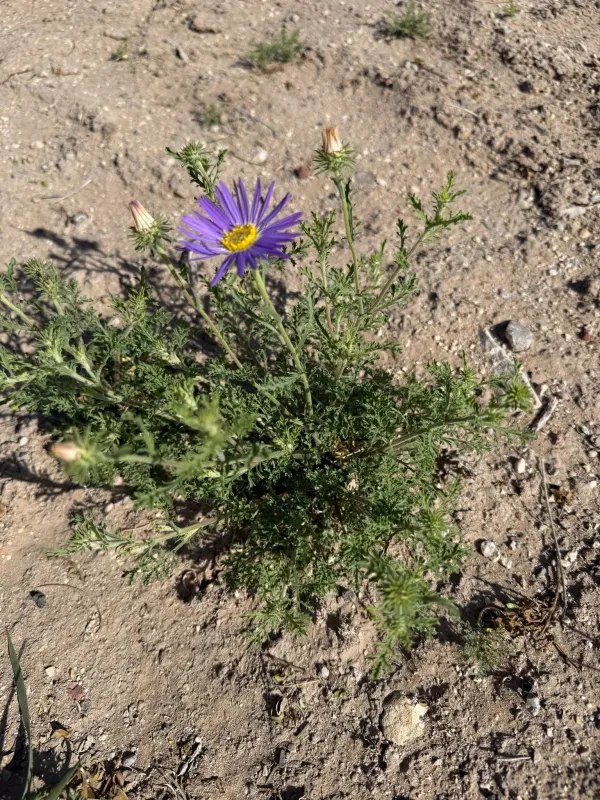
Description
Sowing dates
Tansyleaf tansyaster (Machaeranthera tanacetifolia) is a beautiful annual plant belonging to the Asteraceae family. It is typically propagated by seeds sown during the spring season.
For early bloom, it is highly recommended to start seeds indoors about 6-8 weeks before the last expected frost. The seedlings are then transplanted into the garden once the soil warms up.
Direct seeding in the garden can be performed once the danger of freezing temperatures has passed. Seeds should be sown shallowly as they require exposure to light to germinate effectively.
Spacing is crucial for the development of individual plants. A distance of 25 to 30 centimeters between plants allows for optimal air circulation, reducing the risk of foliage diseases.
The germination period usually lasts between one to two weeks. Providing consistent moisture during the germination stage is essential for establishing strong seedlings.
Growing requirements
Originating from the western regions of North America, this plant is adapted to sunny, open habitats. It performs best when placed in full sun throughout the day.
Soil requirements are relatively modest; however, excellent drainage is non-negotiable. It thrives in gritty, rocky, or sandy soils where water does not pool around the root zone.
While the plant is remarkably drought-tolerant once established, moderate irrigation is beneficial during the initial growth stages to help the root system develop properly.
The plant is highly versatile regarding soil pH, tolerating neutral to slightly alkaline conditions. Adding organic matter is rarely necessary if the soil is already well-draining.
It is important to avoid excessive fertilization, as high nitrogen levels often result in sprawling, weak plants rather than compact and abundantly flowering specimens.
Main diseases and pests
Root rot is the most common issue for this species, especially in environments with poor drainage. Once roots begin to decay, the plant rarely recovers, making prevention through drainage key.
Powdery mildew can occasionally affect the foliage during periods of high humidity and poor air circulation. Proper spacing between plants significantly lowers this risk.
Aphids can be problematic during the budding phase. They congregate on tender new growth, causing stunted development and misshapen flowers if left untreated.
Spider mites are potential pests during dry, hot spells. Regular monitoring of the underside of leaves can help identify an infestation early enough to intervene effectively.
Good cultural practices, such as removing debris and avoiding overhead watering in the evenings, are the best defense against major outbreaks of pests and diseases.