
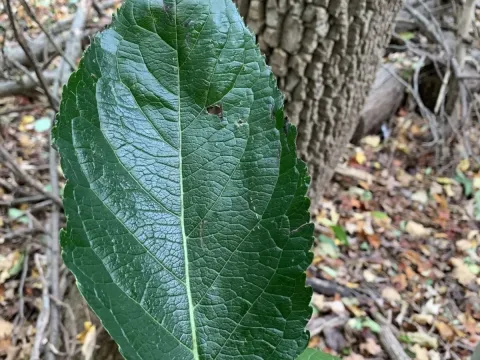
Eucommia
Eucommia Oliv.
Eucommia (Eucommia ulmoides) is a unique, monotypic species belonging to the Eucommiaceae family, native to the temperate forests of central China. It is highly valued as an ornamental tree and a significant source of natural gutta-percha.
What the section contains

Eucommia
Botanically, it is a deciduous tree capable of growing up to 20 meters tall. A distinct feature of the plant is that all parts of it contain elastic rubber-like fibers, which can be observed as thin threads if a leaf or piece of bark is carefully snapped.
The climate requirements for Eucommia include moderate temperatures and good moisture availability. While the species is quite cold-hardy once established, young saplings require protection from extreme winter frosts to avoid terminal bud damage.
For optimal growth, the species prefers deep, fertile, and well-drained soils. It thrives in locations with neutral or slightly acidic soil pH and fails to perform well in waterlogged, clay-heavy, or saline environments where root rot is common.
Agrotechnical management requires consistent weed control and mulching to retain soil moisture during the first few growing seasons. Spacing is crucial to ensure optimal light interception, which promotes the synthesis of its active pharmaceutical compounds.
The primary economic use of Eucommia is in the pharmaceutical and nutraceutical industries. The bark, known as Du Zhong, is a staple in traditional medicine, used to strengthen bones, joints, and support cardiovascular health.
Leaves are harvested during the peak of the growing season to maximize the concentration of flavonoids and iridoids. After harvest, the biomass must be dried carefully using controlled temperatures to ensure the preservation of its medicinal potency.
Yield efficiency is highly dependent on plantation age and orchard management. Well-maintained plantations can produce sustained annual yields of high-quality leaf material, which is processed into standardized extracts for global markets.
Future potential lies in selecting high-yield cultivars that are genetically optimized for specific climates. Advancements in cultivation techniques, such as irrigation scheduling, have significantly increased leaf dry matter production.
Processing technology has evolved to include cold-extraction methods that maintain the integrity of delicate secondary metabolites found in the leaves, increasing the overall market value of the harvested raw material.
Eucommia is remarkably resistant to pests and diseases due to its fibrous, gutta-percha-containing tissues, which serve as a natural defense mechanism against many insects. This makes it an ideal candidate for low-input agricultural systems.
The most common threats are soil-borne pathogens, specifically fungi that thrive in saturated or poorly drained soils. Root rot remains the primary cause of mortality in nurseries and young plantations where water management is neglected.
In rare instances, aphids or leaf-eating beetles may feed on new, tender growth during periods of drought stress. However, these infestations are typically minor and rarely warrant the application of broad-spectrum synthetic pesticides.
Preventative cultural practices, such as maintaining correct planting density and implementing sanitation by pruning dead or diseased wood, are the most effective ways to manage the health of an Eucommia orchard.
Integrated pest management (IPM) focusing on biological controls is recommended for farms aiming for certified organic production of medicinal herbs, ensuring that the final leaf or bark product is free from chemical residues.