
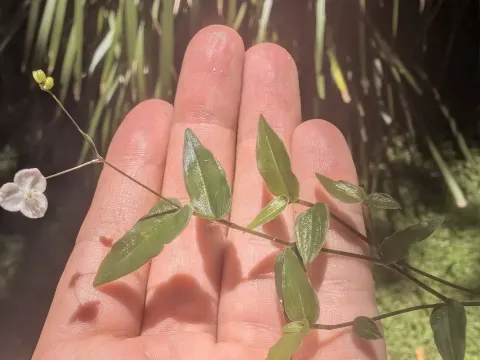
Gibasis
Gibasis
Gibasis is a genus of perennial herbaceous plants belonging to the Commelinaceae family. Often referred to as "bridal veil" due to its delicate appearance, this genus is highly valued for its decorative foliage and prolific, small, star-shaped flowers.
What the section contains

Gibasis
Native to the tropical and subtropical regions of the Americas, these plants are primarily found in moist, shaded environments. Their botanical structure, characterized by succulent-like stems, allows them to survive in diverse habitats, including rocky slopes and forest understories.
To cultivate Gibasis successfully, one must provide bright, indirect sunlight. If placed in direct, harsh sun, the plant leaves are prone to scorching; conversely, inadequate light levels will cause the stems to become leggy and lose their ornamental density.
The ideal temperature for this genus ranges between 18 and 24 degrees Celsius. It is crucial to maintain stable conditions, as the plant is sensitive to sudden temperature fluctuations and cold drafts, which can cause significant stress or leaf drop.
Soil requirements focus on high drainage capacity. A potting mix consisting of peat moss, perlite, and coarse sand is recommended to prevent waterlogging. Ensuring that the pot has sufficient drainage holes is a fundamental aspect of the plant's long-term care.
The primary pests affecting Gibasis are spider mites and mealybugs. These pests thrive in dry indoor climates, making regular misting and cleaning of the foliage essential strategies for maintaining plant health and preventing infestations.
Root rot represents the most significant threat to the survival of the plant, usually caused by overwatering or poorly draining soil. To prevent this, the growing medium should be allowed to dry out slightly between watering cycles to ensure proper root aeration.