
Tahitian Bridal Veil
Gibasis geniculata
Description
Growing requirements
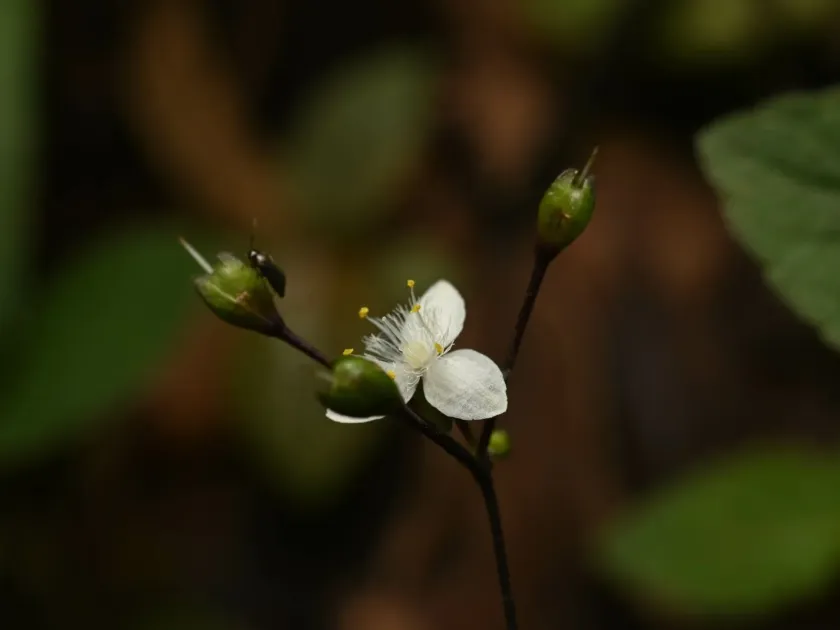
Gibasis geniculata, commonly known as Tahitian Bridal Veil, is a perennial herbaceous plant belonging to the Commelinaceae family. It is prized for its trailing stems and small, delicate white flowers that bloom in clusters.
The species originates from the tropical regions of Central and South America. In its native habitat, it grows as a ground cover or epiphyte in humid, shaded forest areas, which dictates its preference for filtered light.
The plant thrives in temperatures between 18°C and 25°C. It is highly intolerant of frost, requiring indoor conditions or controlled greenhouse environments in temperate zones to survive the year.
Soil requirements include a well-draining, nutrient-rich potting mix. A blend of peat moss, perlite, and organic compost ensures that the roots receive sufficient aeration while retaining necessary moisture.
Consistent moisture is key, but waterlogging must be avoided at all costs. The plant prefers high ambient humidity and benefits from occasional misting, especially during warm seasons when indoor heating dries the air.
Main diseases and pests
Root rot is the most common threat to Gibasis geniculata. It is almost exclusively caused by overwatering or poor drainage in the container, leading to the rapid decay of the vascular system.
Spider mites are the most persistent pests for this plant, thriving in dry indoor conditions. They cause stippling on the leaves and can cause significant damage if the infestation goes unnoticed for too long.
Mealybugs can also infest the plant, settling in the leaf axils. These pests are easily identified by their white, waxy secretions and require localized treatments with insecticidal soap or specific pesticides.
Botrytis, or gray mold, can affect the plant during periods of high humidity and poor air circulation. Proper spacing between plants and adequate ventilation are essential to mitigate this fungal risk.
To maintain plant health, it is recommended to inspect the underside of leaves regularly. Prompt removal of damaged or dying foliage helps to prevent the spread of diseases and pests throughout the crop.