
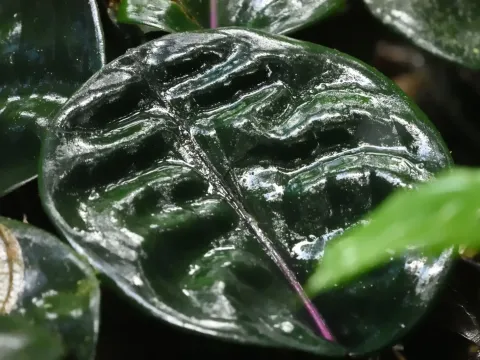
Geogenanthus
Geogenanthus Ule
Geogenanthus is a genus of perennial herbaceous plants belonging to the Commelinaceae family. These plants are native to the tropical rainforests of South America, specifically thriving in the humid, shaded understory of the Amazon basin, where they have evolved to adapt to low-light conditions.
What the section contains

Geogenanthus
The botanical profile of Geogenanthus is defined by its broad, often uniquely patterned leaves and compact growth habit. Due to their visual appeal and distinct foliage, these plants are highly valued in ornamental horticulture as indoor decorative species or greenhouse groundcovers.
To successfully cultivate Geogenanthus, it is essential to maintain a stable, warm environment with temperatures ideally ranging between 18°C and 25°C. The plant is sensitive to temperature fluctuations and cold drafts, which must be avoided to ensure continuous vegetative development.
The growing medium requires a well-draining, nutrient-rich, and slightly acidic substrate. A mixture of peat, perlite, and organic matter is recommended to facilitate adequate moisture retention while ensuring that excess water can escape easily to prevent root asphyxiation.
Geogenanthus requires bright, indirect light to maintain its vibrant leaf coloration. Excessive exposure to direct sunlight will cause leaf scorch and dehydration, while insufficient light may result in leggy growth and loss of natural foliage markings.
The most significant threats to Geogenanthus health arise from improper irrigation practices, specifically overwatering, which leads to root rot and fungal infections. Maintaining consistent, moderate moisture without waterlogging is crucial for long-term survival.
Common pests include spider mites and mealybugs, which thrive in indoor environments with low humidity levels. These pests feed on the plant's cell sap, causing visible damage to the foliage and potentially spreading viral or bacterial pathogens throughout the plant tissue.
Management of these threats involves proactive monitoring of the undersides of leaves and the leaf axils, where pests typically reside. Using organic neem oil or approved systemic insecticides can effectively manage infestations if detected early.
Cultural prevention methods such as increasing ambient humidity and providing good air circulation significantly reduce the likelihood of pest outbreaks and fungal pathogen growth, which are the primary causes of plant decline.
Regular sanitation, including the removal of dead or decaying leaf material, is vital to prevent the spread of diseases and to maintain a healthy aesthetic, ensuring the plant remains a robust ornamental specimen.