
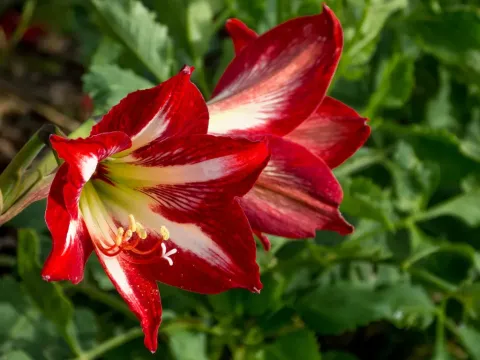
Amaryllis
Amaryllis
Amaryllis is a genus of bulbous plants belonging to the Amaryllidaceae family. The most well-known species, Amaryllis belladonna, originates from the Cape Province of South Africa, where it has evolved to thrive in regions with distinct wet and dry seasons.
What the section contains

Amaryllis
For successful cultivation, the plant requires a well-drained, porous soil medium that allows for adequate oxygen exchange. A heavy or waterlogged soil is unsuitable and will lead to rapid bulb decay, which is the primary cause of plant failure in inexperienced growers.
Light intensity is a critical factor for the development of the bulb and the subsequent formation of the flower stalk. Plants should be placed in areas with bright, indirect sunlight, especially during the active growth phase.
Temperature management is crucial throughout the plant's life cycle. During the growing season, temperatures between 20 °C and 25 °C are optimal. A cooling period is essential for the bulb to transition into dormancy and prepare for the next flowering cycle.
Regular fertilization is necessary to support the plant's high nutritional demands during the active growth phase. A balanced fertilizer with a higher potassium content is recommended to encourage robust growth and future bloom success.
Red blotch disease, also known as Stagonospora curtisii, is the most common fungal threat to Amaryllis. It manifests as red spots or streaks on the leaves and bulbs and can significantly weaken or kill the plant if left untreated.
Pests such as mealybugs, scale insects, and spider mites pose a constant threat, particularly in greenhouse or indoor environments. These pests feed on sap, which causes leaf yellowing and general plant decline.
Narcissus bulb fly larvae can also cause extensive damage by boring into the bulb, leading to complete destruction of the tissue. Monitoring for entry holes and soft spots on the bulb is a critical management practice.
Integrated pest management involves the use of targeted insecticides and ensuring proper air circulation around the plants. Avoiding over-watering is the best preventative measure against most fungal pathogens.
Proper sanitation, including the destruction of heavily infected plant material and the disinfection of containers, is essential for maintaining a healthy collection of bulbs over multiple seasons.