
Alpine snowdrop
Galanthus alpinus
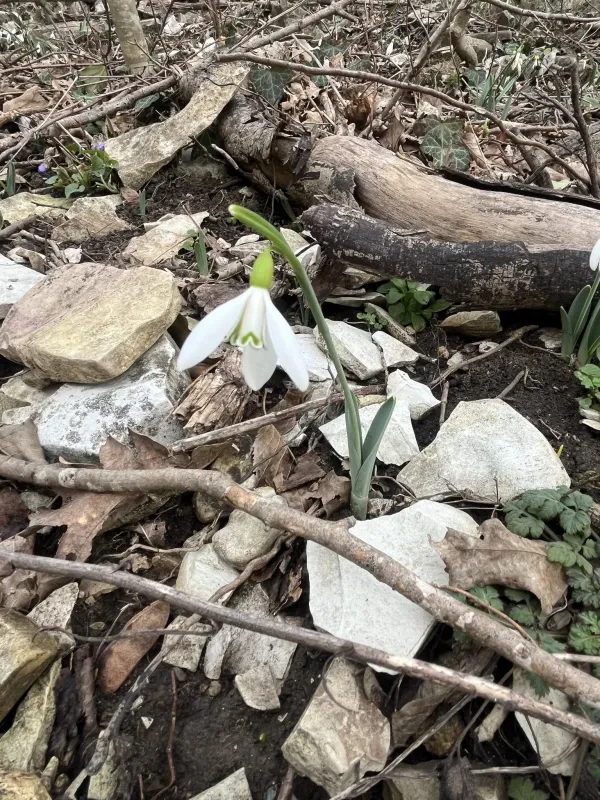
Description
Sowing dates
Planting of Alpine snowdrop bulbs is preferably carried out at the end of the summer season or in early autumn, when the plant is in a state of deep dormancy.
The optimal period for planting in open ground is from mid-August to the end of September, which allows the bulb to root well before the onset of persistent frosts.
If adult plants need to be transplanted, the procedure should be performed immediately after flowering ends, while the leaves have not yet fully yellowed or lost turgor.
Bulbs are planted at a depth equal to two or three of their diameters, maintaining a distance of about 7–10 centimeters between plants for the full development of bulb clusters.
For propagation by seeds, sowing is carried out immediately after harvest in loose soil, although it should be noted that such plants will flower only in the 4th or 5th year of life.
Growing requirements
The Alpine snowdrop is a perennial herbaceous bulbous plant from the Amaryllidaceae family, distinguished by high cold resistance and the ability to break through residual snow cover.
For successful growth, the crop requires semi-shaded areas protected from direct midday sun, which mimics the natural conditions found in forests and mountain slopes.
The soil must be loose, rich in humus, with a neutral or slightly alkaline reaction, and have excellent drainage properties to prevent waterlogging in the root zone.
During the period of active vegetation, the plant needs moderate watering, but during the summer dormancy phase, excessive moisture can lead to rot of the bulb base.
The crop responds excellently to the application of organic fertilizers in the form of well-rotted compost, which promotes better formation of daughter bulbs and abundant flowering the following spring.
Main diseases and pests
The main danger to the plantings is posed by rodents, such as field mice, which can damage bulbs during the winter and early spring period.
In conditions of high humidity and water stagnation, plants are prone to the development of fungal diseases, including gray mold and fusarium, affecting both the aerial part and the bulb.
Among the pests, onion fly larvae are often noted on the crop, which can quickly destroy the root system in the event of a mass infestation of the plantings.
Nematodes are also a serious biological risk factor, leading to leaf deformation and the gradual degeneration of the entire group of plants in the garden plot.
For disease prevention, it is recommended to conduct an annual inspection of the planting material and treat bulbs with broad-spectrum fungicides before planting.