
African lily
Agapanthus africanus (L.) Hoffmanns.
Description
Growing requirements
Agapanthus africanus, commonly known as the African lily, belongs to the Amaryllidaceae family. This perennial species originates from the Cape region of South Africa, thriving in rocky, well-drained habitats under full sun exposure.
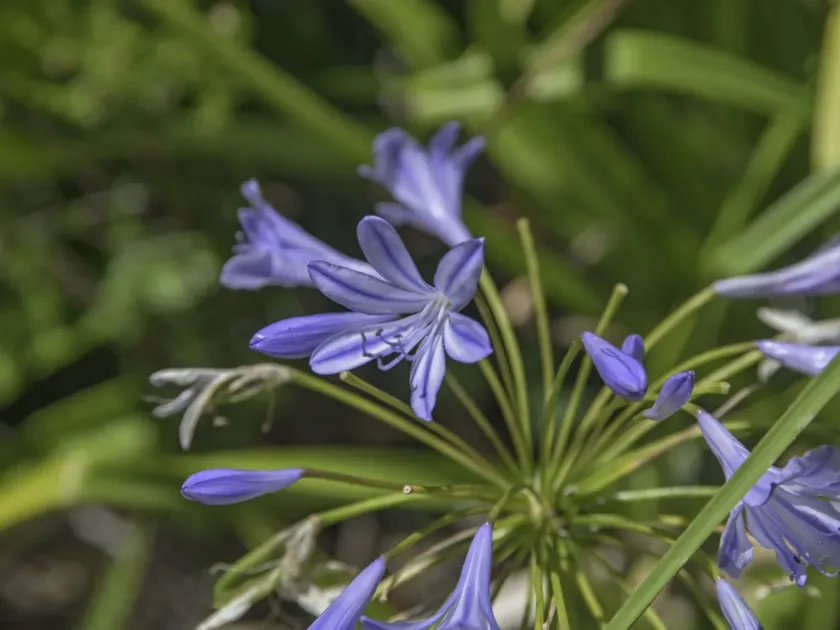
Botanically, it is characterized by a thick, fleshy rhizome and dense, evergreen, strap-shaped leaves. Its inflorescence is a globe-shaped umbel containing numerous tubular flowers that typically bloom during the mid-to-late summer months.
To cultivate this species successfully, ensure a site with full sunlight and protection from harsh, drying winds. In colder regions, it must be grown in containers to facilitate moving the plant indoors during the winter dormant season.
Soil requirements dictate a porous, nutrient-rich potting medium. A mix containing compost, sand, and garden loam is ideal to ensure drainage, as waterlogged soil is fatal to the root system during colder temperatures.
The primary use of this crop is ornamental. It is a staple in landscaping for container gardening, accent planting in Mediterranean-style gardens, and as a popular choice for long-lasting cut floral arrangements.
Main diseases and pests
Excessive irrigation is the most common cause of root rot, often caused by pathogens like Phytophthora, which thrive in stagnant water around the rhizome.
Spider mites are prevalent during hot and dry spells; they affect the foliage by sucking nutrients, leading to mottled leaves and reduced plant vigor.
Mealybugs can be a persistent issue in indoor settings, hiding within the tight clusters of the foliage and requiring persistent cleaning or systemic treatments.
Slugs and snails often feed on young, succulent foliage during the active growth period, necessitating the use of perimeter barriers or organic deterrents.
Successful management relies on preventive maintenance, such as proper spacing for air circulation, monitoring humidity levels, and ensuring that the soil medium never remains overly wet for extended periods.